Betegség
Utazási betegség gyermekeknél: mi segít
Az antihisztaminok mögött Cochrane-áttekintés áll. A polcokon mellettük kapható legtöbb termék nem.

Miért történik ez
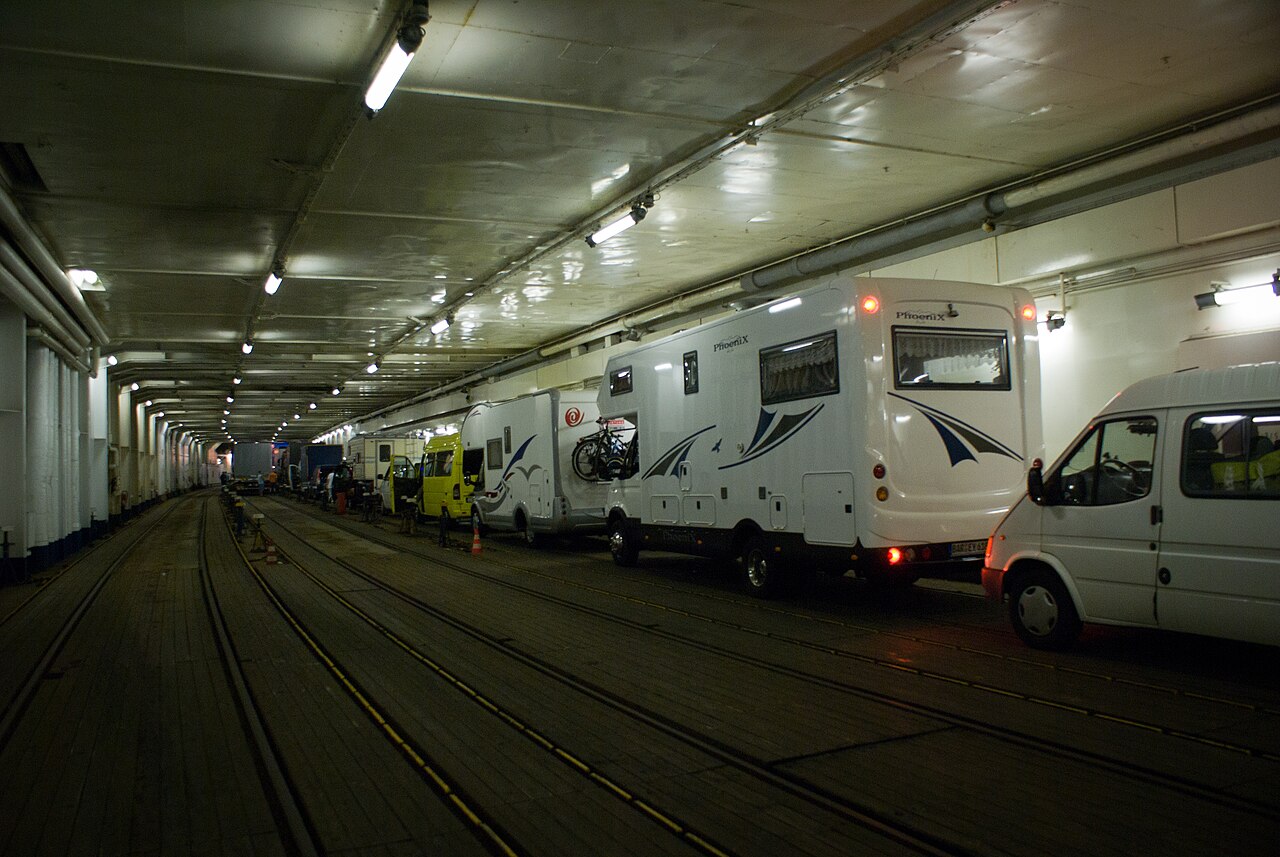
A vestibularis rendszer mozgást jelent; a szemed egy statikus belsőt. Az agy két összeegyeztethetetlen beszámolót kap ugyanarról a helyzetről, és hányingert tapasztal. Ez az egyetlen mechanizmus szinte minden gyakorlati tanácsot megmagyaráz.
Ez azt is megmagyarázza, hogy a sofőr miért ritkán érez hányingert: látja, hová megy az autó, és előre várja a mozgásokat, így a beszámolók egybeesnek.
A mozgásbetegség farmakológiai kezelése
Milyen bizonyíték van
| Megközelítés | Bizonyítékok | Megjegyzés |
|---|---|---|
| Antihisztaminok | Cochrane-áttekintés [2] | A szedáció a fő hátrány; adagolás életkor szerint, kérdezze meg a gyógyszerészt |
| Skopolamid | Meta-analizált [1] | Általában idősebb gyermekek és felnőttek számára; tapasz formájában |
| Horizont nézése | Mechanikailag megalapozott | Első ülés, ahol jogilag megengedett és életkorhoz illeszkedő |
| Friss levegő, hűvös kabin | Széles körben ajánlott | Alacsony költség, alacsony bizonyíték, alacsony kockázat |
| Képernyők kerülése | Mechanikailag megalapozott | Közvetlenül súlyosbítja a vizuális-vestibuláris konfliktust |
| Akupresszúrás karkötők | Gyenge és következetlen | Ártalmatlan; a várakozási hatások valószínűleg hozzájárulnak a jelentett előnyhöz. |
| Gyömbér | Vegyes | Néhány támogatás más hányinger kontextusokban |
Gyakorlati intézkedések
- Ültesse őket olyan helyre, ahol előre láthatnak. A vizuális és vestibuláris információk jobban egyetértenek, ha előre néznek, mint oldalra.
- Tartsa a kabint hűvösen és szellőztetve. A hőség és a fülledtség súlyosbítja a helyzetet.
- Könnyű étkezés előtte. Egy üres gyomor és egy nehéz étkezés mindkettő rosszabb, mint valami kicsi.
- Váltson audioformátumra kanyargós utakon. Az autópályák sokkal tolerálhatóbbak a képernyők számára, mint a hegyi átjárók.
- Álljon meg az első jelre. Amint a hányás elkezdődik, a további út sokkal nehezebben menthető.
- Hozza magával az alapvető felszerelést. Táskák, törlőkendők, váltóruha, víz. Az előkészületek csökkentik mindenki stresszét.
Gyakori kérdések
Melyik a leghatékonyabb kezelés?
Az antihisztaminokat Cochrane-szintű bizonyíték támasztja alá [2]. Az álmosság az ára, és az adagolást érdemes gyógyszerésszel egyeztetni.
Működnek a csuklópántok?
A bizonyíték gyenge és ellentmondásos. Ártalmatlanok, és a beszámolt előny valószínűleg elvárási hatásokkal magyarázható.
Kinövik ezt?
A legtöbb gyermek igen. A hajlam jellemzően kora gyermekkor közepén tetőzik, majd csökken.
Rossz ötlet a táblagép az autóban?
Egy hajlamos gyermek esetén kanyargós úton általában igen. A hangalapú szórakoztatás ugyanazt az elterelést biztosítja a vizuális konfliktus nélkül.


Related reading
References
Every citation below links to the original peer-reviewed record on PubMed or via DOI. Nothing here is a substitute for medical advice.
-
Mental health during the COVID-19 pandemic in children and adolescents with ADHD: A systematic review of controlled longitudinal cohort studies Dessain A, Parlatini V, Singh A, et al. · Neuroscience and biobehavioral reviews · 2024 · Systematic review DOIPubMed 38065419
-
Scopolamine for patients with motion sickness: a systematic review and meta-analysis with trial sequential analysis Zhang YX, Niu XY, Xiao ZY, et al. · Acta oto-laryngologica · 2024 · Meta-analysis DOIPubMed 39225593
-
Physical Activity of Children and Adolescents in Croatia: A Global Matrix 4.0 Systematic Review of Its Prevalence and Associated Personal, Social, Environmental, and Policy Factors Pedišić Ž, Strika M, Matolić T, et al. · Journal of physical activity & health · 2023 · Systematic review DOIPubMed 37076241
-
Antihistamines for motion sickness Karrim N, Byrne R, Magula N, et al. · The Cochrane database of systematic reviews · 2022 · Systematic review DOIPubMed 36250781Full text
-
[Update on PONV-What is new in prophylaxis and treatment of postoperative nausea and vomiting? : Summary of recent consensus recommendations and Cochrane reviews on prophylaxis and treatment of postoperative nausea and vomiting] Kienbaum P, Schaefer MS, Weibel S, et al. · Der Anaesthesist · 2022 · Meta-analysis DOIPubMed 34596699
-
Association between digital smart device use and myopia: a systematic review and meta-analysis Foreman J, Salim AT, Praveen A, et al. · The Lancet. Digital health · 2021 · Meta-analysis DOIPubMed 34625399
-
Systematic review of the relationships between sedentary behaviour and health indicators in the early years (0-4 years) Poitras VJ, Gray CE, Janssen X, et al. · BMC public health · 2017 · Systematic review DOIPubMed 29219092Full text
-
Mal de debarquement syndrome: a systematic review Van Ombergen A, Van Rompaey V, Maes LK, et al. · Journal of neurology · 2016 · Systematic review DOIPubMed 26559820Full text
-
Associations of children's independent mobility and active travel with physical activity, sedentary behaviour and weight status: a systematic review Schoeppe S, Duncan MJ, Badland H, et al. · Journal of science and medicine in sport · 2013 · Systematic review DOIPubMed 23219100
-
Scopolamine (hyoscine) for preventing and treating motion sickness Spinks A, Wasiak J · The Cochrane database of systematic reviews · 2011 · Meta-analysis DOIPubMed 21678338Full text
-
Scopolamine (hyoscine) for preventing and treating motion sickness Spinks AB, Wasiak J, Villanueva EV, et al. · The Cochrane database of systematic reviews · 2007 · Systematic review DOIPubMed 17636710
-
Scopolamine for preventing and treating motion sickness Spinks AB, Wasiak J, Villanueva EV, et al. · The Cochrane database of systematic reviews · 2004 · Systematic review DOIPubMed 15266468
-
Statement on motion sickness Canada communicable disease report = Releve des maladies transmissibles au Canada · 2003 · Clinical guideline PubMed 14655530
-
A comparison of virtual reality and verbal imaginal exposure for childhood anxiety disorders Biggs BK, Whiteside SPH, Knutson M, et al. · Journal of anxiety disorders · 2025 · Randomised controlled trial DOIPubMed 39879857Full text
-
Virtual reality application matches the most established treatment for Mal de Debarquement Syndrome: A non-inferiority, randomized, open clinical trial Schoenmaekers C, De Smet D, Deblieck C, et al. · Neurotherapeutics : the journal of the American Society for Experimental NeuroTherapeutics · 2024 · Randomised controlled trial DOIPubMed 38942708Full text
-
Double-blind randomized N-of-1 trial of transcranial alternating current stimulation for mal de débarquement syndrome Cha YH, Gleghorn D, Doudican BC · PloS one · 2022 · Randomised controlled trial DOIPubMed 35120184Full text
-
Healthy Children, Strong Families 2: A randomized controlled trial of a healthy lifestyle intervention for American Indian families designed using community-based approaches Tomayko EJ, Prince RJ, Cronin KA, et al. · Clinical trials (London, England) · 2017 · Randomised controlled trial DOIPubMed 28064525Full text
-
Double-Blind Sham-Controlled Crossover Trial of Repetitive Transcranial Magnetic Stimulation for Mal de Debarquement Syndrome Cha YH, Deblieck C, Wu AD · Otology & neurotology : official publication of the American Otological Society, American Neurotology Society [and] European Academy of Otology and Neurotology · 2016 · Randomised controlled trial DOIPubMed 27176615Full text
-
A comparison of cinnarizine and transdermal scopolamine for the prevention of seasickness in naval crew: a double-blind, randomized, crossover study Gil A, Nachum Z, Tal D, et al. · Clinical neuropharmacology · 2012 · Randomised controlled trial DOIPubMed 22139622
-
Weight status, modes of travel to school and screen time: a cross-sectional survey of children aged 10-13 years in Sydney Wen LM, Merom D, Rissel C, et al. · Health promotion journal of Australia : official journal of Australian Association of Health Promotion Professionals · 2010 · Randomised controlled trial DOIPubMed 20406154
-
Incidence of vomiting in susceptible children under regional analgesia with two different anaesthetic techniques Sarti A, Busoni P, Dell'Oste C, et al. · Paediatric anaesthesia · 2004 · Randomised controlled trial DOIPubMed 14996265
-
Chlorpheniramine for motion sickness Buckey JC, Alvarenga D, Cole B, et al. · Journal of vestibular research : equilibrium & orientation · 2004 · Randomised controlled trial PubMed 15156097
-
A comparison of cyclizine, ondansetron and placebo as prophylaxis against postoperative nausea and vomiting in children O'Brien CM, Titley G, Whitehurst P · Anaesthesia · 2003 · Randomised controlled trial DOIPubMed 12886917
-
Effect of timing of ondansetron administration on incidence of postoperative vomiting in paediatric strabismus surgery Madan R, Perumal T, Subramaniam K, et al. · Anaesthesia and intensive care · 2000 · Randomised controlled trial DOIPubMed 10701032
-
Prophylactic therapy with combined granisetron and dexamethasone for the prevention of post-operative vomiting in children Fujii Y, Saitoh Y, Tanaka H, et al. · European journal of anaesthesiology · 1999 · Randomised controlled trial DOIPubMed 10434165
-
Prevention of postoperative vomiting with granisetron in paediatric patients with and without a history of motion sickness Fujii Y, Saitoh Y, Tanaka H, et al. · Paediatric anaesthesia · 1999 · Randomised controlled trial DOIPubMed 10597557
-
The Neurophysiology and Treatment of Motion Sickness Koch A, Cascorbi I, Westhofen M, et al. · Deutsches Arzteblatt international · 2018 · Review DOIPubMed 30406755Full text
-
Interventions designed to reduce sedentary behaviours in young people: a review of reviews Biddle SJ, Petrolini I, Pearson N · British journal of sports medicine · 2014 · Review DOIPubMed 24347578
-
Bedtime Regularity and Sleep Sufficiency in Children With Tourette Syndrome Swisher VS, Liu S, Ricketts EJ · Pediatric neurology · 2024 · Journal article DOIPubMed 38945036
-
Sleep duration in preschool children and impact of screen time Lan QY, Chan KC, Yu KN, et al. · Sleep medicine · 2020 · Journal article DOIPubMed 33091726
-
Well-Child Visits for Infants and Young Children Turner K · American family physician · 2018 · Journal article PubMed 30215922