Malestar
Mal de viatge en nens: què funciona
Els antihistamínics tenen una revisió de Cochrane al darrere. La majoria del que es ven al costat d'ells a la prestatgeria no ho té.
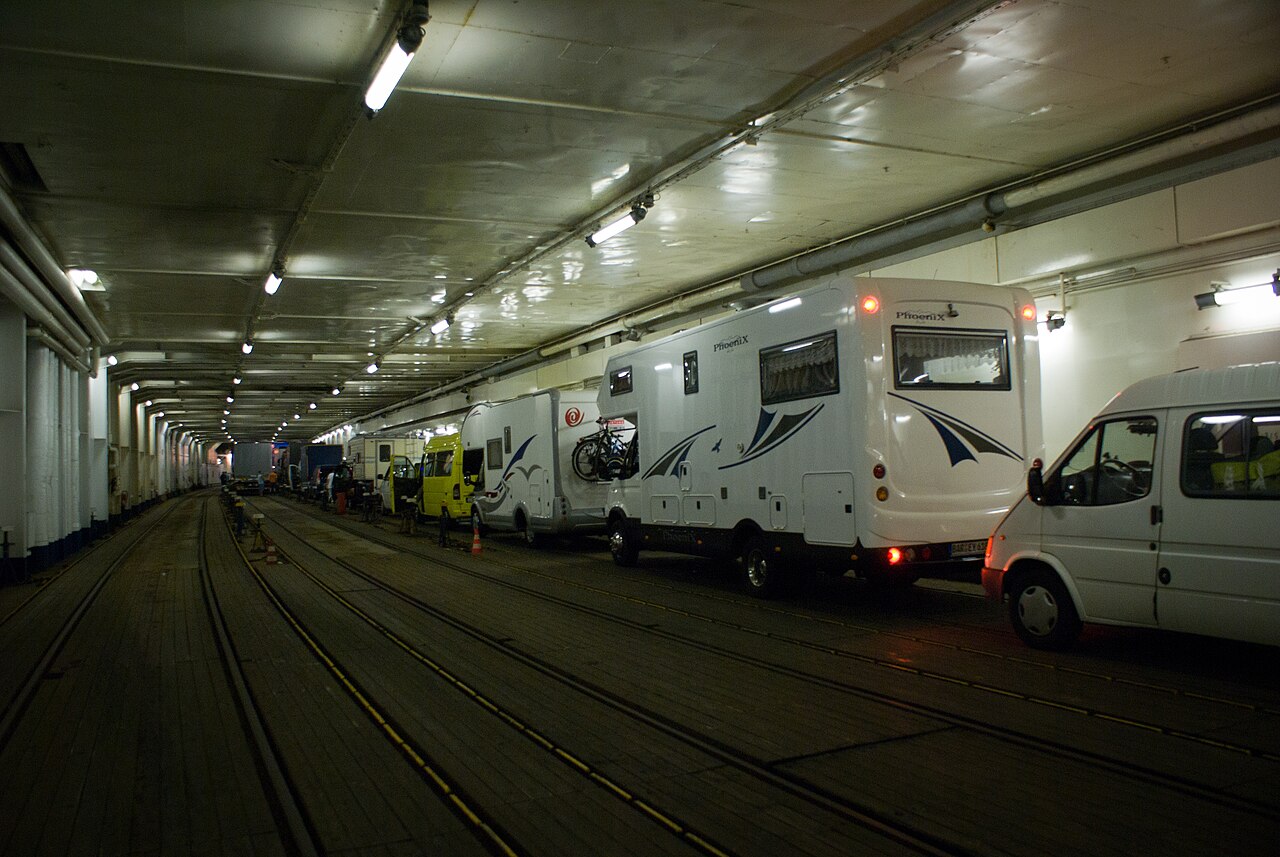

Per què passa
El teu sistema vestibular informa del moviment; els teus ulls informen d'un interior estacionari. El cervell rep dues versions incompatibles de la mateixa situació i respon amb nàusees. Aquest únic mecanisme explica gairebé tots els consells pràctics.
També explica per què el conductor rarament se sent malament: pot veure cap a on va el cotxe i anticipa cada moviment, així que els informes coincideixen.
Tractament farmacològic del mal de viatge
Què té evidència
| Enfocament | Evidència | Nota |
|---|---|---|
| Antihistamínics | Revisió de Cochrane [2] | La sedació és el principal compromís; dosi per edat, pregunta a un farmacèutic |
| Escopolamina | Meta-analitzada [1] | Generalment per a nens més grans i adults; forma de pegat |
| Mirar cap a l'horitzó | Mecanismes sòlids | Seient davanter on sigui legalment permès i apropiat per l'edat |
| Aire fresc, cabina fresca | Ampliament recomanat | Baix cost, baixa evidència, baix risc |
| Evitar pantalles | Mecanismes sòlids | Empitjora directament el conflicte visual-vestibular |
| Banda d'acupressió | Feble i inconsistent | Inofensiva; els efectes d'expectativa probablement expliquen el benefici reportat. |
| Gingebre | Mixt | Alguns suports en altres contextos de nàusea |
Mesures pràctiques
- Seure'ls on puguin veure endavant. La informació visual i vestibular coincideix millor mirant endavant que de costat.
- Mantenir la cabina fresca i ventilada. La calor i la manca d'aire ho empitjoren.
- Menjar lleuger abans. Un estómac buit i un àpat pesat són pitjors que alguna cosa petita.
- Canviar a àudio en carreteres sinuoses. Les autopistes són molt més tolerables per a les pantalles que els passos de muntanya.
- Aturar-se al primer senyal. Un cop comença el vòmit, la resta del viatge és molt més difícil de rescatar.
- Portar el kit obvi. Bosses, tovalloletes, un canvi de roba, aigua. La preparació redueix l'estrès de tothom.
Preguntes freqüents
Quin és el tractament més eficaç?
Els antihistamínics compten amb suport de nivell Cochrane [2]. La sedació n'és la contrapartida, i cal comprovar la dosificació amb un farmacèutic.
Funcionen les polseres?
L'evidència és feble i inconsistent. Són inofensives, i els efectes d'expectativa expliquen plausiblement el benefici que es descriu.
Se'ls passarà amb l'edat?
A la majoria de nens, sí. La susceptibilitat sol assolir el màxim a mitjana infància i després disminueix.
És mala idea fer servir tauletes al cotxe?
Per a un nen susceptible en una carretera amb corbes, sol ser-ho. L'àudio aconsegueix la mateixa distracció sense el conflicte visual.

Lectura relacionada
Referències
Cada cita a continuació enllaça amb el registre original revisat per parells a PubMed o a través de DOI. Res d'això és un substitut del consell mèdic.
-
Mental health during the COVID-19 pandemic in children and adolescents with ADHD: A systematic review of controlled longitudinal cohort studies Dessain A, Parlatini V, Singh A, et al. · Neuroscience and biobehavioral reviews · 2024 · Systematic review DOIPubMed 38065419
-
Scopolamine for patients with motion sickness: a systematic review and meta-analysis with trial sequential analysis Zhang YX, Niu XY, Xiao ZY, et al. · Acta oto-laryngologica · 2024 · Meta-analysis DOIPubMed 39225593
-
Physical Activity of Children and Adolescents in Croatia: A Global Matrix 4.0 Systematic Review of Its Prevalence and Associated Personal, Social, Environmental, and Policy Factors Pedišić Ž, Strika M, Matolić T, et al. · Journal of physical activity & health · 2023 · Systematic review DOIPubMed 37076241
-
Antihistamines for motion sickness Karrim N, Byrne R, Magula N, et al. · The Cochrane database of systematic reviews · 2022 · Systematic review DOIPubMed 36250781Full text
-
[Update on PONV-What is new in prophylaxis and treatment of postoperative nausea and vomiting? : Summary of recent consensus recommendations and Cochrane reviews on prophylaxis and treatment of postoperative nausea and vomiting] Kienbaum P, Schaefer MS, Weibel S, et al. · Der Anaesthesist · 2022 · Meta-analysis DOIPubMed 34596699
-
Association between digital smart device use and myopia: a systematic review and meta-analysis Foreman J, Salim AT, Praveen A, et al. · The Lancet. Digital health · 2021 · Meta-analysis DOIPubMed 34625399
-
Systematic review of the relationships between sedentary behaviour and health indicators in the early years (0-4 years) Poitras VJ, Gray CE, Janssen X, et al. · BMC public health · 2017 · Systematic review DOIPubMed 29219092Full text
-
Mal de debarquement syndrome: a systematic review Van Ombergen A, Van Rompaey V, Maes LK, et al. · Journal of neurology · 2016 · Systematic review DOIPubMed 26559820Full text
-
Associations of children's independent mobility and active travel with physical activity, sedentary behaviour and weight status: a systematic review Schoeppe S, Duncan MJ, Badland H, et al. · Journal of science and medicine in sport · 2013 · Systematic review DOIPubMed 23219100
-
Scopolamine (hyoscine) for preventing and treating motion sickness Spinks A, Wasiak J · The Cochrane database of systematic reviews · 2011 · Meta-analysis DOIPubMed 21678338Full text
-
Scopolamine (hyoscine) for preventing and treating motion sickness Spinks AB, Wasiak J, Villanueva EV, et al. · The Cochrane database of systematic reviews · 2007 · Systematic review DOIPubMed 17636710
-
Scopolamine for preventing and treating motion sickness Spinks AB, Wasiak J, Villanueva EV, et al. · The Cochrane database of systematic reviews · 2004 · Systematic review DOIPubMed 15266468
-
Statement on motion sickness Canada communicable disease report = Releve des maladies transmissibles au Canada · 2003 · Clinical guideline PubMed 14655530
-
A comparison of virtual reality and verbal imaginal exposure for childhood anxiety disorders Biggs BK, Whiteside SPH, Knutson M, et al. · Journal of anxiety disorders · 2025 · Randomised controlled trial DOIPubMed 39879857Full text
-
Virtual reality application matches the most established treatment for Mal de Debarquement Syndrome: A non-inferiority, randomized, open clinical trial Schoenmaekers C, De Smet D, Deblieck C, et al. · Neurotherapeutics : the journal of the American Society for Experimental NeuroTherapeutics · 2024 · Randomised controlled trial DOIPubMed 38942708Full text
-
Double-blind randomized N-of-1 trial of transcranial alternating current stimulation for mal de débarquement syndrome Cha YH, Gleghorn D, Doudican BC · PloS one · 2022 · Randomised controlled trial DOIPubMed 35120184Full text
-
Healthy Children, Strong Families 2: A randomized controlled trial of a healthy lifestyle intervention for American Indian families designed using community-based approaches Tomayko EJ, Prince RJ, Cronin KA, et al. · Clinical trials (London, England) · 2017 · Randomised controlled trial DOIPubMed 28064525Full text
-
Double-Blind Sham-Controlled Crossover Trial of Repetitive Transcranial Magnetic Stimulation for Mal de Debarquement Syndrome Cha YH, Deblieck C, Wu AD · Otology & neurotology : official publication of the American Otological Society, American Neurotology Society [and] European Academy of Otology and Neurotology · 2016 · Randomised controlled trial DOIPubMed 27176615Full text
-
A comparison of cinnarizine and transdermal scopolamine for the prevention of seasickness in naval crew: a double-blind, randomized, crossover study Gil A, Nachum Z, Tal D, et al. · Clinical neuropharmacology · 2012 · Randomised controlled trial DOIPubMed 22139622
-
Weight status, modes of travel to school and screen time: a cross-sectional survey of children aged 10-13 years in Sydney Wen LM, Merom D, Rissel C, et al. · Health promotion journal of Australia : official journal of Australian Association of Health Promotion Professionals · 2010 · Randomised controlled trial DOIPubMed 20406154
-
Incidence of vomiting in susceptible children under regional analgesia with two different anaesthetic techniques Sarti A, Busoni P, Dell'Oste C, et al. · Paediatric anaesthesia · 2004 · Randomised controlled trial DOIPubMed 14996265
-
Chlorpheniramine for motion sickness Buckey JC, Alvarenga D, Cole B, et al. · Journal of vestibular research : equilibrium & orientation · 2004 · Randomised controlled trial PubMed 15156097
-
A comparison of cyclizine, ondansetron and placebo as prophylaxis against postoperative nausea and vomiting in children O'Brien CM, Titley G, Whitehurst P · Anaesthesia · 2003 · Randomised controlled trial DOIPubMed 12886917
-
Effect of timing of ondansetron administration on incidence of postoperative vomiting in paediatric strabismus surgery Madan R, Perumal T, Subramaniam K, et al. · Anaesthesia and intensive care · 2000 · Randomised controlled trial DOIPubMed 10701032
-
Prophylactic therapy with combined granisetron and dexamethasone for the prevention of post-operative vomiting in children Fujii Y, Saitoh Y, Tanaka H, et al. · European journal of anaesthesiology · 1999 · Randomised controlled trial DOIPubMed 10434165
-
Prevention of postoperative vomiting with granisetron in paediatric patients with and without a history of motion sickness Fujii Y, Saitoh Y, Tanaka H, et al. · Paediatric anaesthesia · 1999 · Randomised controlled trial DOIPubMed 10597557
-
The Neurophysiology and Treatment of Motion Sickness Koch A, Cascorbi I, Westhofen M, et al. · Deutsches Arzteblatt international · 2018 · Review DOIPubMed 30406755Full text
-
Interventions designed to reduce sedentary behaviours in young people: a review of reviews Biddle SJ, Petrolini I, Pearson N · British journal of sports medicine · 2014 · Review DOIPubMed 24347578
-
Bedtime Regularity and Sleep Sufficiency in Children With Tourette Syndrome Swisher VS, Liu S, Ricketts EJ · Pediatric neurology · 2024 · Journal article DOIPubMed 38945036
-
Sleep duration in preschool children and impact of screen time Lan QY, Chan KC, Yu KN, et al. · Sleep medicine · 2020 · Journal article DOIPubMed 33091726
-
Well-Child Visits for Infants and Young Children Turner K · American family physician · 2018 · Journal article PubMed 30215922