Arrêts
À quelle fréquence s'arrêter lors d'un long trajet ?
Environ toutes les deux heures pour le conducteur, plus souvent pour les jeunes enfants, et une voiture électrique voudra s'arrêter à peu près au même intervalle de toute façon.
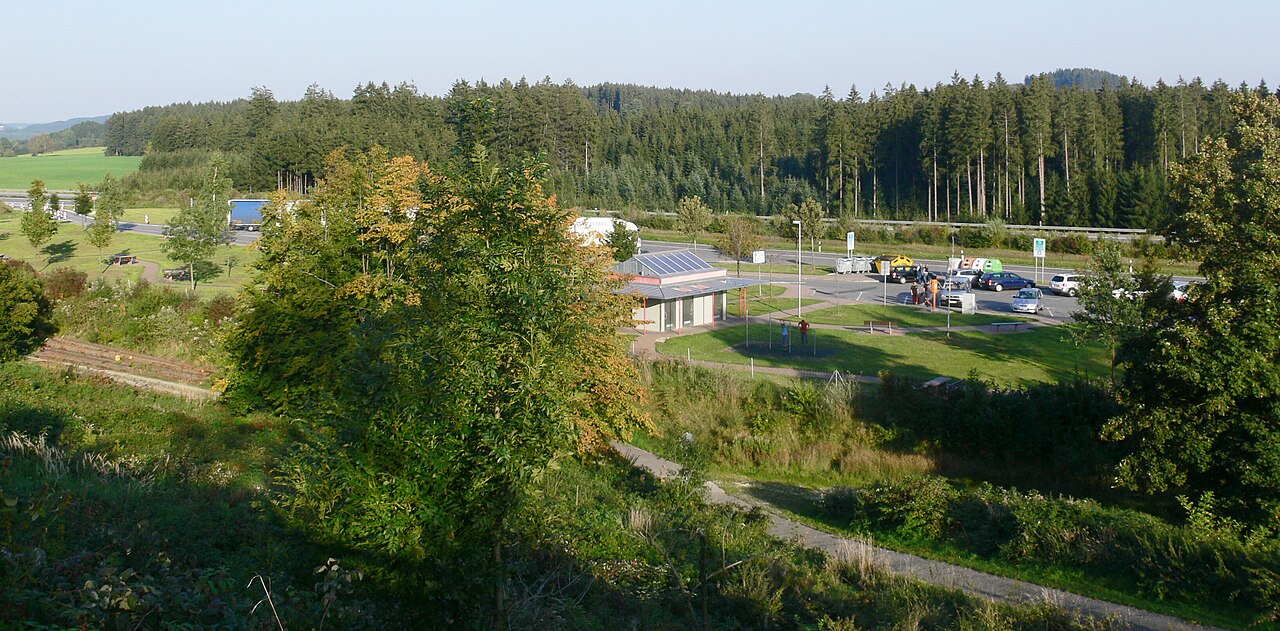

Le conducteur passe en premier
La fatigue dégrade le temps de réaction, l'attention et la perception des dangers, et cela se produit de manière suffisamment graduelle pour que vous soyez un mauvais juge de votre propre état. Les revues des facteurs de risque de sécurité routière la placent systématiquement parmi les contributeurs significatifs [3].
Les recommandations conventionnelles — une pause d'au moins quinze minutes environ toutes les deux heures — sont pragmatiques plutôt que dérivées d'un seuil précis. C'est aussi, commodément, proche de ce qu'une voiture électrique moderne souhaite ; notre explication sur les arrêts de recharge couvre pourquoi.
Fatigue du conducteur et risque d'accident
Les enfants en ont besoin plus souvent
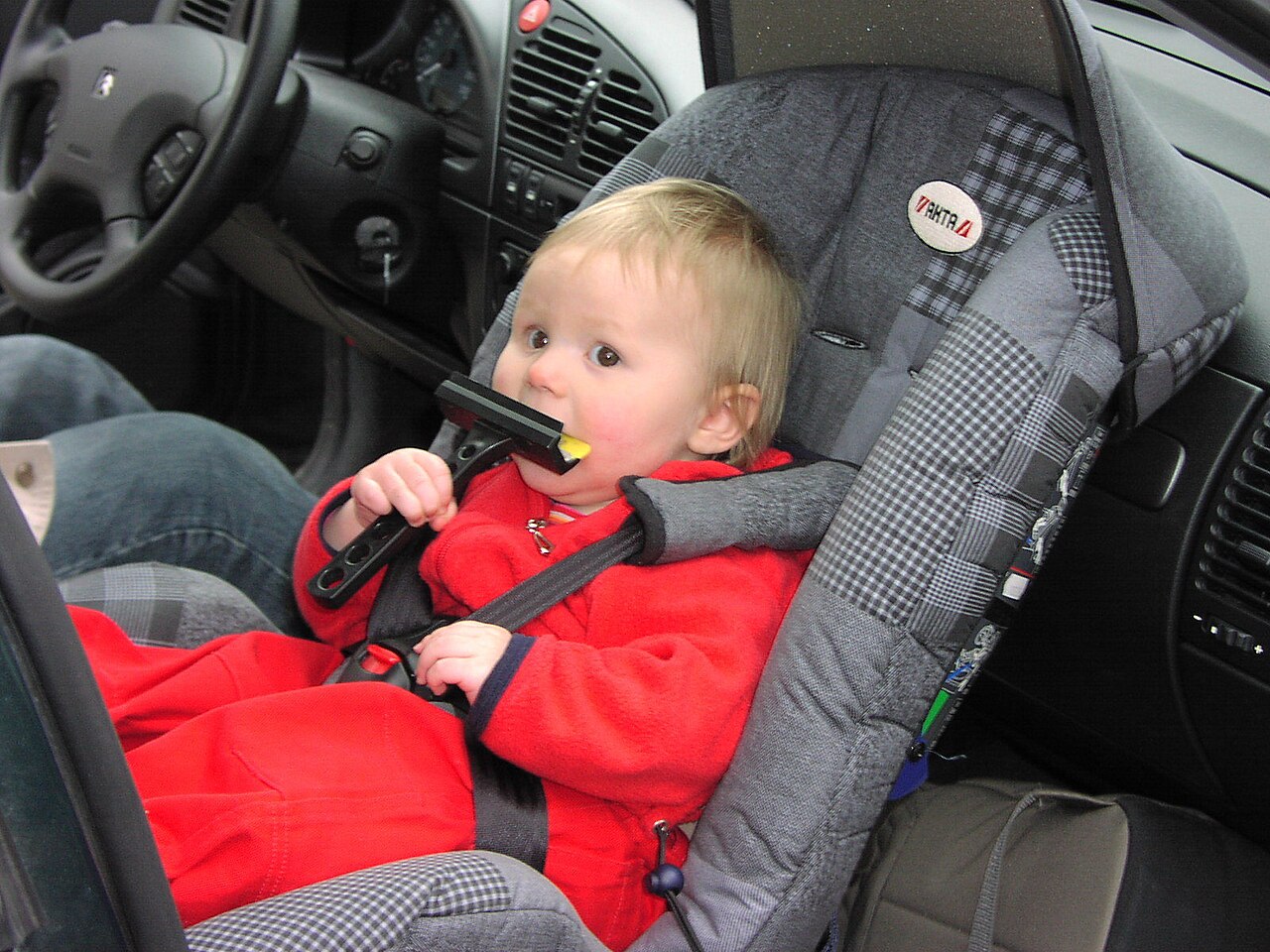
Les jeunes enfants tolèrent la retenue pendant des périodes plus courtes, et les recommandations pour les nourrissons en particulier déconseillent de très longues périodes ininterrompues dans un siège auto, car une position semi-verticale maintenue pendant des heures peut affecter la respiration chez les très jeunes. Pour les tout-petits et les enfants plus âgés, la contrainte est comportementale plutôt que physiologique, mais elle n'est pas moins réelle.
| Passager | Intervalle | Durée d'arrêt |
|---|---|---|
| Conducteur | Environ toutes les 2 heures | 15+ minutes, hors de la voiture |
| Nourrisson dans un siège auto | Suivez les recommandations de votre fabricant de siège | Hors du siège, allongé à plat |
| Tout-petit | Toutes les 1,5-2 heures | 20+ minutes, à courir |
| Enfant plus âgé | Toutes les 2-3 heures | 15+ minutes |
Utilisation des dispositifs de retenue
Les revues systématiques des blessures liées aux accidents chez les enfants [1] et des interventions en matière de sécurité routière [2][3] identifient à plusieurs reprises l'utilisation correcte des dispositifs de retenue comme un facteur de protection majeur. Le mot qui fait la différence est correct — l'utilisation incorrecte est courante, et un siège installé de manière lâche ou avec des sangles tordues fonctionne bien en dessous de sa note.
Lors d'un long voyage, il vaut mieux vérifier l'installation avant de partir plutôt qu'à la première pause, et il est bon de savoir que de nombreux pays offrent des services de vérification gratuits.
Questions fréquentes
Combien de temps un bébé peut-il rester dans un siège auto ?
Est-il préférable de conduire la nuit pendant qu'ils dorment ?
Les arrêts allongent-ils beaucoup le trajet ?
Où devrions-nous nous arrêter ?

Related reading
References
Every citation below links to the original peer-reviewed record on PubMed or via DOI. Nothing here is a substitute for medical advice.
-
Pediatric motor vehicle crashes injuries: A systematic review for forensic evaluation Giovannini E, Santelli S, Pelletti G, et al. · International journal of legal medicine · 2024 · Systematic review DOIPubMed 38337078Full text
-
Surveillance methods and interventions implemented in American Indian and Alaska Native communities to increase child restraint device and seat belt use in motor vehicles: a systematic review Virtue C, Goffe C, Shiang E, et al. · Injury prevention : journal of the International Society for Child and Adolescent Injury Prevention · 2024 · Systematic review DOIPubMed 38302282Full text
-
Saving lives through road safety risk factor interventions: global and national estimates Vecino-Ortiz AI, Nagarajan M, Elaraby S, et al. · Lancet (London, England) · 2022 · Systematic review DOIPubMed 35779550
-
Systematic review of child passenger safety laws and their associations with child restraint system use, injuries and deaths Sartin EB, Lombardi LR, Mirman JH · Injury prevention : journal of the International Society for Child and Adolescent Injury Prevention · 2021 · Systematic review DOIPubMed 34011513
-
Facilitators and barriers to child restraint use in motor vehicles: a qualitative evidence synthesis Bhaumik S, Hunter K, Matzopoulos R, et al. · Injury prevention : journal of the International Society for Child and Adolescent Injury Prevention · 2020 · Systematic review DOIPubMed 32447304
-
Systematic review of child restraint system interventions (2007-2018) Glerum KM, Zonfrillo MR, Fleisher L, et al. · Traffic injury prevention · 2019 · Systematic review DOIPubMed 31725324
-
Child Passenger Safety Durbin DR, Hoffman BD · Pediatrics · 2018 · Clinical guideline DOIPubMed 30166368
-
A systematic review of community interventions to improve Aboriginal child passenger safety Ishikawa T, Oudie E, Desapriya E, et al. · American journal of public health · 2014 · Systematic review DOIPubMed 24754652Full text
-
Community-based programs to promote car seat restraints in children 0-16 years -- a systematic review Turner C, McClure R, Nixon J, et al. · Accident; analysis and prevention · 2005 · Systematic review DOIPubMed 15607278
-
What are the most effective ways of improving population health through transport interventions? Evidence from systematic reviews Morrison DS, Petticrew M, Thomson H · Journal of epidemiology and community health · 2003 · Systematic review DOIPubMed 12700214Full text
-
Preventing childhood unintentional injuries--what works? A literature review Dowswell T, Towner EM, Simpson G, et al. · Injury prevention : journal of the International Society for Child and Adolescent Injury Prevention · 1996 · Systematic review DOIPubMed 9346079Full text
-
A Prospective, Randomized Comparison of Functional Bracing and Spica Casting for Femoral Fractures Showed Equivalent Early Outcomes Andras LM, Sanders JS, Phan TN, et al. · The Journal of bone and joint surgery. American volume · 2025 · Randomised controlled trial DOIPubMed 40570075
-
Randomised feasibility trial of a virtual intervention to address infant car seat misuse Kendi S, Taylor MF, Thomas B, et al. · Injury prevention : journal of the International Society for Child and Adolescent Injury Prevention · 2023 · Randomised controlled trial DOIPubMed 36096654Full text
-
Evaluation of parental education using biomechanical visualization to increase child restraint use in China Peng Y, Zhang M, Yan S, et al. · Accident; analysis and prevention · 2022 · Randomised controlled trial DOIPubMed 35278847
-
Trust in expert versus lay comments in online articles about spanking and car seat safety Scott JK, Gershoff ET · Journal of family psychology : JFP : journal of the Division of Family Psychology of the American Psychological Association (Division 43) · 2021 · Randomised controlled trial DOIPubMed 32658516Full text
-
Assessing an App-Based Child Restraint System Use Intervention in China: An RCT Yan S, Yang J, Fu J, et al. · American journal of preventive medicine · 2020 · Randomised controlled trial DOIPubMed 32334955
-
System providing automated feedback improves task learning outcomes during child restraint system (CRS) installations Mansfield JA, Bolte JH · Traffic injury prevention · 2020 · Randomised controlled trial DOIPubMed 33078961
-
Randomized Controlled Trial of Acute Illness Educational Intervention in the Pediatric Emergency Department: Written Versus Application-Based Education Lepley BE, Brousseau DC, May MF, et al. · Pediatric emergency care · 2020 · Randomised controlled trial DOIPubMed 30624425
-
Pilot Trial of an Emergency Department-based Intervention to Promote Child Passenger Safety Best Practices Macy ML, Kandasamy D, Resnicow K, et al. · Academic emergency medicine : official journal of the Society for Academic Emergency Medicine · 2019 · Randomised controlled trial DOIPubMed 30637887Full text
-
Car seat education: A randomized controlled trial of teaching methods Kuroiwa E, Ragar RL, Langlais CS, et al. · Injury · 2018 · Randomised controlled trial DOIPubMed 29739654
-
A randomised safety promotion intervention trial among low-income families with toddlers Wang Y, Gielen AC, Magder LS, et al. · Injury prevention : journal of the International Society for Child and Adolescent Injury Prevention · 2018 · Randomised controlled trial DOIPubMed 28385953Full text
-
Parent-Based Intervention to Improve Child Restraint Use Among Kindergarteners in China Lei H, Gao R, Yang J, et al. · American journal of public health · 2018 · Randomised controlled trial DOIPubMed 30252521Full text
-
Teaching infant car seat installation via interactive visual presence: An experimental trial Schwebel DC, Johnston A, Rouse J · Traffic injury prevention · 2017 · Randomised controlled trial DOIPubMed 27576099
-
Child Passenger Safety Technician Consultation in the Pediatric Primary Care Setting Burstein D, Zonfrillo MR, Baird J, et al. · Clinical pediatrics · 2017 · Randomised controlled trial DOIPubMed 28443338
-
Designing and evaluating a persuasive child restraint television commercial Lewis I, Ho B, Lennon A · Traffic injury prevention · 2016 · Randomised controlled trial DOIPubMed 26207520
-
Maternal depressive symptoms and parenting practices 3-months postpartum Balbierz A, Bodnar-Deren S, Wang JJ, et al. · Maternal and child health journal · 2015 · Randomised controlled trial DOIPubMed 25374288Full text
-
Program fidelity measures associated with an effective child restraint program: Buckle-Up Safely Hunter K, Keay L, Simpson JM, et al. · American journal of public health · 2015 · Randomised controlled trial DOIPubMed 25602901Full text
-
Randomized controlled trial of a car safety seat insert to reduce hypoxia in term infants McIntosh CG, Tonkin SL, Gunn AJ · Pediatrics · 2013 · Randomised controlled trial DOIPubMed 23858423
-
Evaluation of an education, restraint distribution, and fitting program to promote correct use of age-appropriate child restraints for children aged 3 to 5 years: a cluster randomized trial Keay L, Hunter K, Brown J, et al. · American journal of public health · 2012 · Randomised controlled trial DOIPubMed 23078492Full text
-
Child Restraint Fitting Stations reduce incorrect restraint use among child occupants Brown J, Finch CF, Hatfield J, et al. · Accident; analysis and prevention · 2011 · Randomised controlled trial DOIPubMed 21376910
-
A comparison of respiratory patterns in healthy term infants placed in car safety seats and beds Kornhauser Cerar L, Scirica CV, Stucin Gantar I, et al. · Pediatrics · 2009 · Randomised controlled trial DOIPubMed 19706572
-
Child Passenger Safety Zonfrillo MR · Pediatric clinics of North America · 2025 · Review DOIPubMed 41193143
-
Interactive Virtual Presence to Remotely Assist Parents With Car Seat Installation Schwebel DC, MacKay M, Beasley TM, et al. · Pediatrics · 2025 · Clinical trial DOIPubMed 41077424
-
Forgotten children in parked vehicles: a review of Italian fatalities Scozzari G, Bert F, Gualano MR, et al. · Minerva pediatrica · 2020 · Review DOIPubMed 29381013
-
Traveling with children: beyond car seat safety Polli JB, Polli I · Jornal de pediatria · 2015 · Review DOIPubMed 26232504
-
Road safety legislation in the Americas Híjar M, Pérez-Núñez R, Inclán-Valadez C, et al. · Revista panamericana de salud publica = Pan American journal of public health · 2012 · Review DOIPubMed 22910728
-
[Effect of fatigue on the fitness to drive] Makowiec-Dabrowska T, Bortkiewicz A, Siedlecka J, et al. · Medycyna pracy · 2011 · Review PubMed 21870418
-
Road safety research in China: review and appraisal Wang P, Rau PL, Salvendy G · Traffic injury prevention · 2010 · Review DOIPubMed 20730690
-
Rear-facing child safety seat effectiveness: evidence from motor vehicle crash data Anderson DM, Peterson RW · Injury prevention : journal of the International Society for Child and Adolescent Injury Prevention · 2023 · Journal article DOIPubMed 36918272
-
Injury Patterns, Imaging Usage, and Disparities Associated With Car Restraint Use in Children McCauley CJ, Purcell LN, Schiro SE, et al. · The American surgeon · 2023 · Journal article DOIPubMed 37220878