Pausen
Wie oft sollten Sie bei einer langen Fahrt anhalten?
Ungefähr alle zwei Stunden für den Fahrer, häufiger für kleine Kinder, und ein Elektroauto wird ohnehin in etwa demselben Intervall anhalten wollen.


Der Fahrer kommt zuerst
Müdigkeit beeinträchtigt die Reaktionszeit, die Aufmerksamkeit und die Gefahrenwahrnehmung, und das geschieht allmählich genug, dass man seinen eigenen Zustand schlecht einschätzen kann. Überprüfungen von Risikofaktoren für die Verkehrssicherheit platzieren es konsequent unter den signifikanten Beiträgen [3].
Die konventionelle Empfehlung — eine Pause von mindestens fünfzehn Minuten ungefähr alle zwei Stunden — ist pragmatisch und nicht aus einem scharfen Schwellenwert abgeleitet. Sie ist auch, praktischerweise, nah an dem, was ein modernes Elektroauto möchte; unser Erklärungsartikel zu Ladestopps behandelt, warum.
Fahrermüdigkeit und Unfallrisiko
Kinder benötigen es häufiger
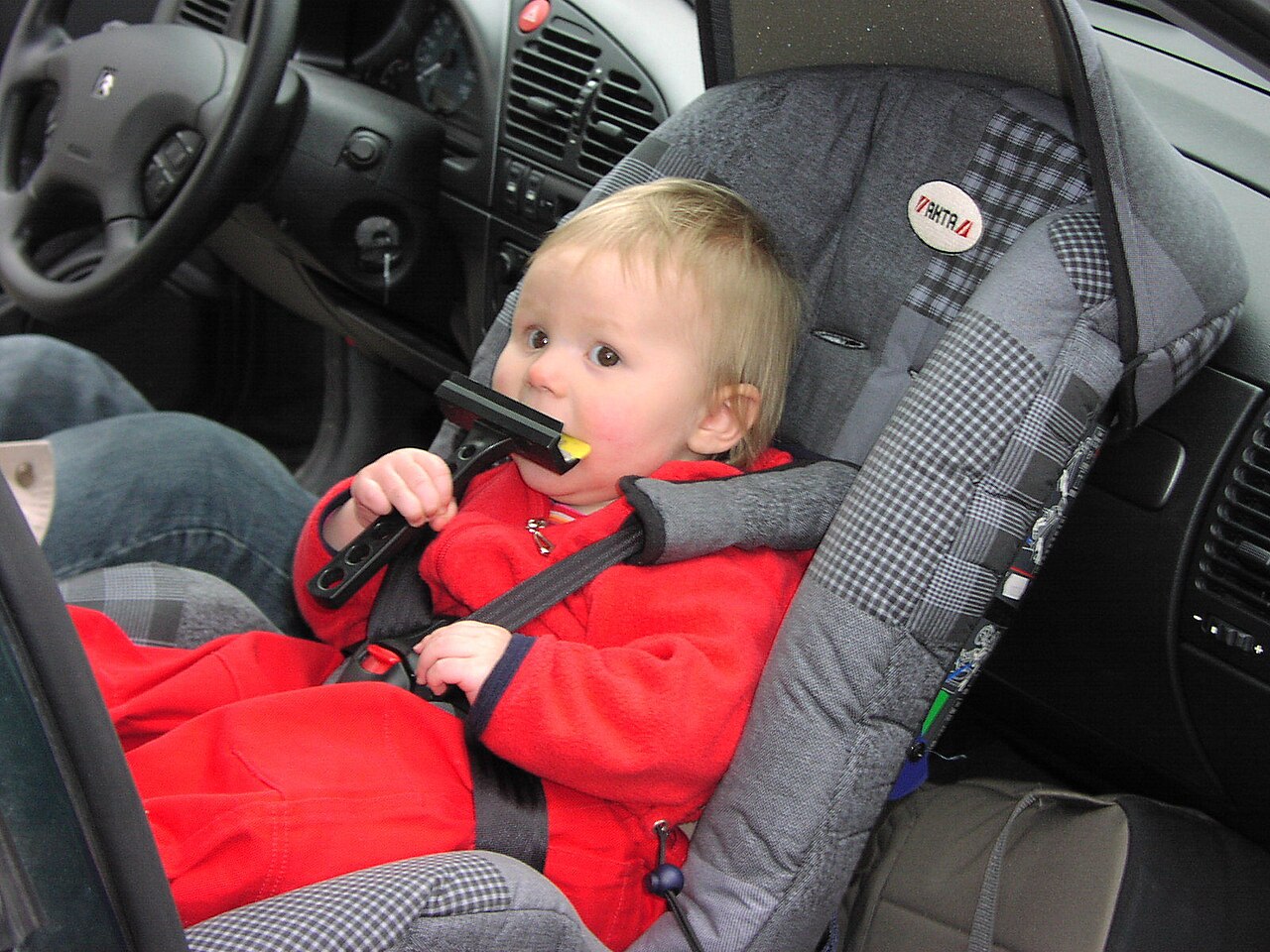
Jüngere Kinder tolerieren die Rückhaltesysteme nur für kürzere Zeiträume, und die Anleitung für Säuglinge rät insbesondere von sehr langen ununterbrochenen Zeiträumen in einem Autositz ab, da eine halb aufrechte Position, die über Stunden gehalten wird, die Atmung bei sehr jungen Kindern beeinträchtigen kann. Bei Kleinkindern und älteren Kindern ist die Einschränkung verhaltensbedingt und nicht physiologisch, aber sie ist nicht weniger real.
| Passagier | Intervall | Dauer des Stopps |
|---|---|---|
| Fahrer | Alle ~2 Stunden | 15+ Minuten, aus dem Auto |
| Säugling im Autositz | Befolgen Sie die Anweisungen des Sitzherstellers | Aus dem Sitz, flach liegend |
| Kleinkind | Alle 1,5-2 Stunden | 20+ Minuten, herumlaufen |
| Älteres Kind | Alle 2-3 Stunden | 15+ Minuten |
Verwendung von Rückhaltesystemen
Systematische Überprüfungen von pädiatrischen Unfallverletzungen [1] und von Interventionen zur Verkehrssicherheit [2][3] identifizieren wiederholt die korrekte Verwendung von Rückhaltesystemen als einen wichtigen Schutzfaktor. Das entscheidende Wort ist korrekt — Missbrauch ist häufig, und ein locker installierter Sitz oder mit verdrehten Gurten schneidet weit unter seiner Bewertung ab.
Auf einer langen Reise ist es ratsam, die Installation vor der Abfahrt zu überprüfen, anstatt beim ersten Stopp, und es ist gut zu wissen, dass viele Länder kostenlose Überprüfungsdienste anbieten.
Häufige Fragen
Wie lange kann ein Baby im Autositz bleiben?
Ist es besser, nachts zu fahren, während sie schlafen?
Verlängern Stopps die Fahrt erheblich?
Wo sollten wir anhalten?

Related reading
References
Every citation below links to the original peer-reviewed record on PubMed or via DOI. Nothing here is a substitute for medical advice.
-
Pediatric motor vehicle crashes injuries: A systematic review for forensic evaluation Giovannini E, Santelli S, Pelletti G, et al. · International journal of legal medicine · 2024 · Systematic review DOIPubMed 38337078Full text
-
Surveillance methods and interventions implemented in American Indian and Alaska Native communities to increase child restraint device and seat belt use in motor vehicles: a systematic review Virtue C, Goffe C, Shiang E, et al. · Injury prevention : journal of the International Society for Child and Adolescent Injury Prevention · 2024 · Systematic review DOIPubMed 38302282Full text
-
Saving lives through road safety risk factor interventions: global and national estimates Vecino-Ortiz AI, Nagarajan M, Elaraby S, et al. · Lancet (London, England) · 2022 · Systematic review DOIPubMed 35779550
-
Systematic review of child passenger safety laws and their associations with child restraint system use, injuries and deaths Sartin EB, Lombardi LR, Mirman JH · Injury prevention : journal of the International Society for Child and Adolescent Injury Prevention · 2021 · Systematic review DOIPubMed 34011513
-
Facilitators and barriers to child restraint use in motor vehicles: a qualitative evidence synthesis Bhaumik S, Hunter K, Matzopoulos R, et al. · Injury prevention : journal of the International Society for Child and Adolescent Injury Prevention · 2020 · Systematic review DOIPubMed 32447304
-
Systematic review of child restraint system interventions (2007-2018) Glerum KM, Zonfrillo MR, Fleisher L, et al. · Traffic injury prevention · 2019 · Systematic review DOIPubMed 31725324
-
Child Passenger Safety Durbin DR, Hoffman BD · Pediatrics · 2018 · Clinical guideline DOIPubMed 30166368
-
A systematic review of community interventions to improve Aboriginal child passenger safety Ishikawa T, Oudie E, Desapriya E, et al. · American journal of public health · 2014 · Systematic review DOIPubMed 24754652Full text
-
Community-based programs to promote car seat restraints in children 0-16 years -- a systematic review Turner C, McClure R, Nixon J, et al. · Accident; analysis and prevention · 2005 · Systematic review DOIPubMed 15607278
-
Preventing childhood unintentional injuries--what works? A literature review Dowswell T, Towner EM, Simpson G, et al. · Injury prevention : journal of the International Society for Child and Adolescent Injury Prevention · 1996 · Systematic review DOIPubMed 9346079Full text
-
A Prospective, Randomized Comparison of Functional Bracing and Spica Casting for Femoral Fractures Showed Equivalent Early Outcomes Andras LM, Sanders JS, Phan TN, et al. · The Journal of bone and joint surgery. American volume · 2025 · Randomised controlled trial DOIPubMed 40570075
-
Randomised feasibility trial of a virtual intervention to address infant car seat misuse Kendi S, Taylor MF, Thomas B, et al. · Injury prevention : journal of the International Society for Child and Adolescent Injury Prevention · 2023 · Randomised controlled trial DOIPubMed 36096654Full text
-
Trust in expert versus lay comments in online articles about spanking and car seat safety Scott JK, Gershoff ET · Journal of family psychology : JFP : journal of the Division of Family Psychology of the American Psychological Association (Division 43) · 2021 · Randomised controlled trial DOIPubMed 32658516Full text
-
Randomized Controlled Trial of Acute Illness Educational Intervention in the Pediatric Emergency Department: Written Versus Application-Based Education Lepley BE, Brousseau DC, May MF, et al. · Pediatric emergency care · 2020 · Randomised controlled trial DOIPubMed 30624425
-
Car seat education: A randomized controlled trial of teaching methods Kuroiwa E, Ragar RL, Langlais CS, et al. · Injury · 2018 · Randomised controlled trial DOIPubMed 29739654
-
A randomised safety promotion intervention trial among low-income families with toddlers Wang Y, Gielen AC, Magder LS, et al. · Injury prevention : journal of the International Society for Child and Adolescent Injury Prevention · 2018 · Randomised controlled trial DOIPubMed 28385953Full text
-
Teaching infant car seat installation via interactive visual presence: An experimental trial Schwebel DC, Johnston A, Rouse J · Traffic injury prevention · 2017 · Randomised controlled trial DOIPubMed 27576099
-
Child Passenger Safety Technician Consultation in the Pediatric Primary Care Setting Burstein D, Zonfrillo MR, Baird J, et al. · Clinical pediatrics · 2017 · Randomised controlled trial DOIPubMed 28443338
-
Designing and evaluating a persuasive child restraint television commercial Lewis I, Ho B, Lennon A · Traffic injury prevention · 2016 · Randomised controlled trial DOIPubMed 26207520
-
Child Restraint Fitting Stations reduce incorrect restraint use among child occupants Brown J, Finch CF, Hatfield J, et al. · Accident; analysis and prevention · 2011 · Randomised controlled trial DOIPubMed 21376910
-
Child Passenger Safety Zonfrillo MR · Pediatric clinics of North America · 2025 · Review DOIPubMed 41193143
-
Forgotten children in parked vehicles: a review of Italian fatalities Scozzari G, Bert F, Gualano MR, et al. · Minerva pediatrica · 2020 · Review DOIPubMed 29381013
-
Traveling with children: beyond car seat safety Polli JB, Polli I · Jornal de pediatria · 2015 · Review DOIPubMed 26232504
-
[Effect of fatigue on the fitness to drive] Makowiec-Dabrowska T, Bortkiewicz A, Siedlecka J, et al. · Medycyna pracy · 2011 · Review PubMed 21870418
-
Road safety research in China: review and appraisal Wang P, Rau PL, Salvendy G · Traffic injury prevention · 2010 · Review DOIPubMed 20730690
-
Injury Patterns, Imaging Usage, and Disparities Associated With Car Restraint Use in Children McCauley CJ, Purcell LN, Schiro SE, et al. · The American surgeon · 2023 · Journal article DOIPubMed 37220878
-
Child safety restraint patterns in Moldova Cazacu-Stratu A, Varga NK, Cociu S, et al. · Traffic injury prevention · 2022 · Journal article DOIPubMed 35947496Full text
-
Physiological signal analysis for fatigue level of experienced and inexperienced drivers Li R, Su W, Lu Z · Traffic injury prevention · 2017 · Journal article DOIPubMed 27589585
-
Driving fatigue in professional drivers: a survey of truck and taxi drivers Meng F, Li S, Cao L, et al. · Traffic injury prevention · 2015 · Journal article DOIPubMed 25357206
-
The impacts of multiple rest-break periods on commercial truck driver's crash risk Chen C, Xie Y · Journal of safety research · 2014 · Journal article DOIPubMed 24529096
-
Driver fatigue and highway driving: a simulator study Ting PH, Hwang JR, Doong JL, et al. · Physiology & behavior · 2008 · Journal article DOIPubMed 18402991