Stopiau
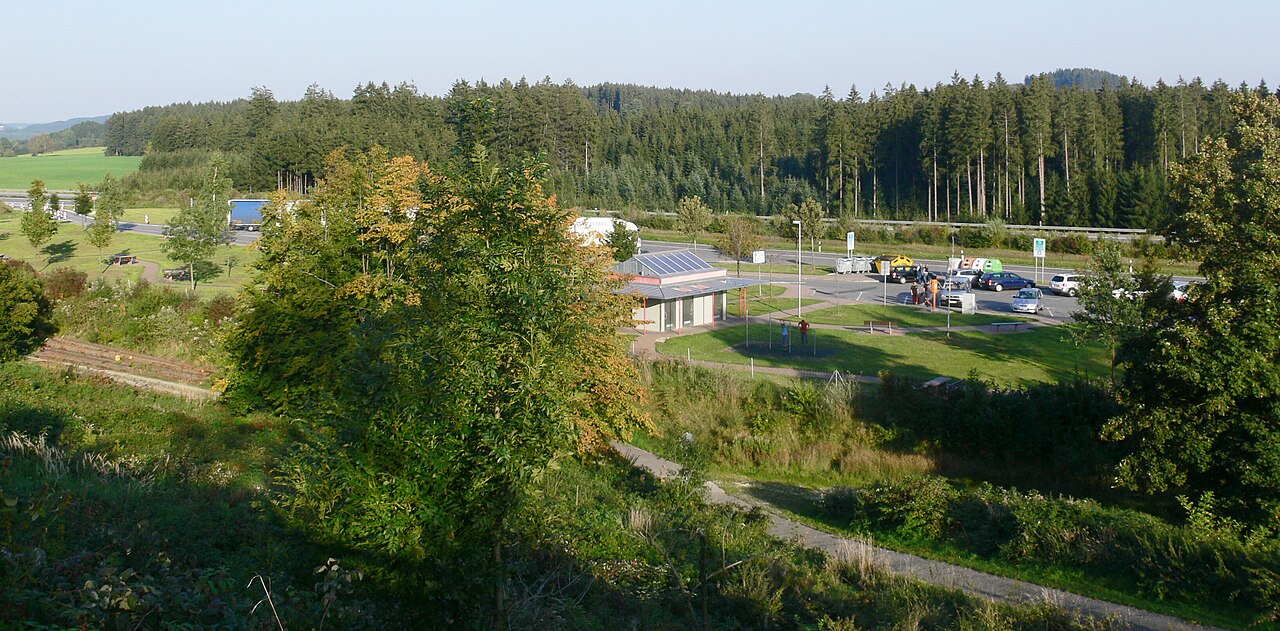
Pa mor aml ddylit ti stopio ar daith hir?
Tua bob dwy awr i'r gyrrwr, yn fwy aml ar gyfer plant ifanc, a bydd car trydan eisiau stopio ar yr un cyfnod beth bynnag.

Mae'r gyrrwr yn dod yn gyntaf
Mae blinder yn dirywio amser ymateb, sylw a chanfyddiad perygl, ac mae'n gwneud hynny'n raddol yn ddigon fel eich bod yn wael yn gwerthfawrogi eich cyflwr eich hun. Mae adolygiadau o ffactorau risg diogelwch ffyrdd yn ei leoli'n gyson ymhlith y cyfranwyr pwysig [3].
Mae'r cyfarwyddyd confensiynol — seibiant o leiaf pymtheg munud tua bob dwy awr — yn pragmatig yn hytrach na'i gael o ddirgryniad miniog. Mae hefyd, yn gyfleus, yn agos at yr hyn y mae car trydan modern ei eisiau; mae ein esboniad ar stopiau gwefru yn esbonio pam.
Blinder gyrrwr a risg damwain
Mae angen iddo'n fwy aml ar blant
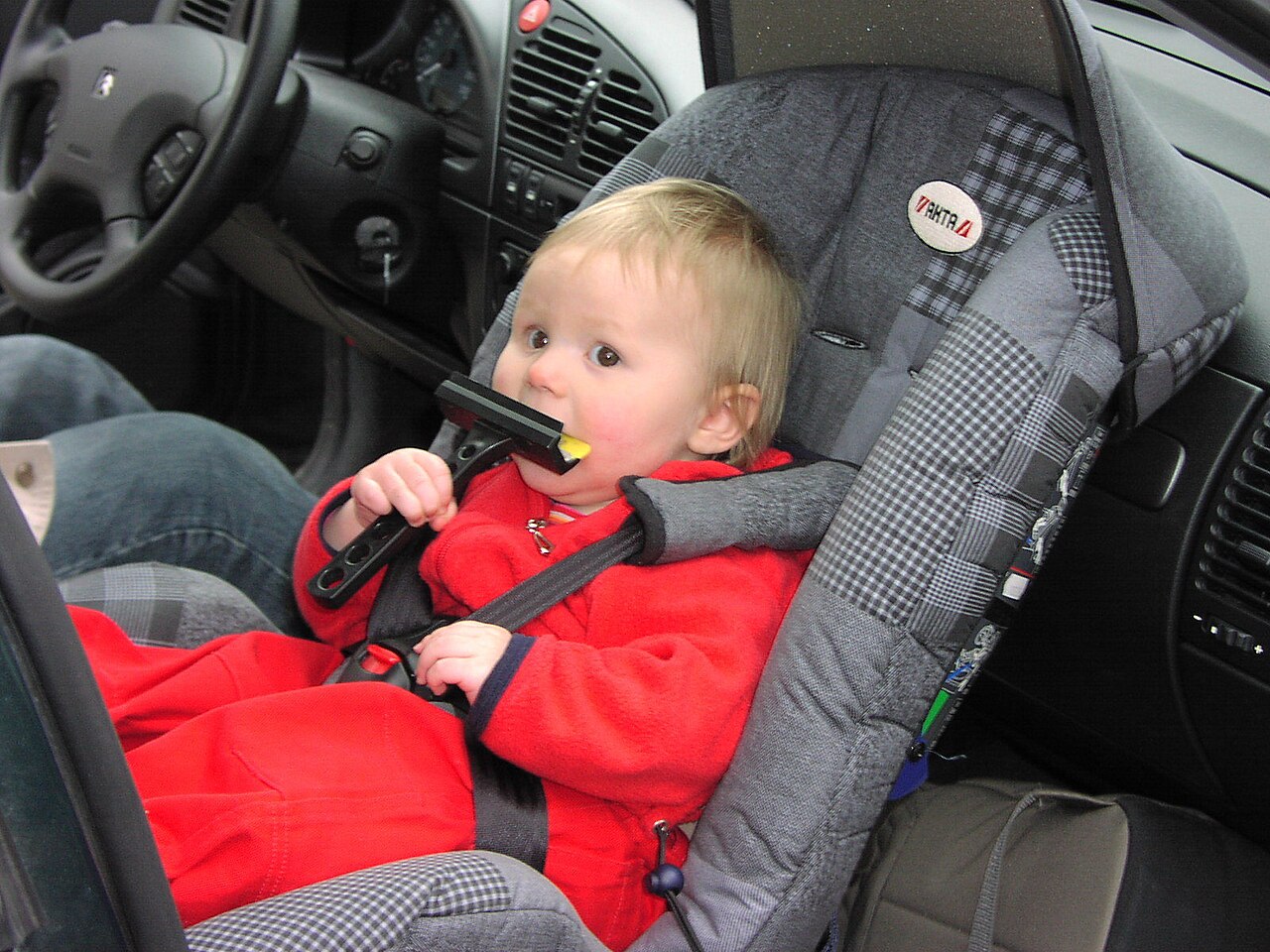
Mae plant ifanc yn goddef cyfyngiadau am gyfnodau byrrach, ac mae cyfarwyddyd i fabanod yn benodol yn cynghori yn erbyn cyfnodau hir heb dorri mewn cadair gyswllt, oherwydd gall sefyllfa hanner-ymgorffori a gynhelir am oriau effeithio ar anadlu yn y rhai ifanc iawn. Ar gyfer plant bach a phlant hŷn, mae'r cyfyngiad yn ymddygiadol yn hytrach na ffisiolegol, ond nid yw'n llai real.
| Teithwyr | Cyfnod | Hyd y stop |
|---|---|---|
| Gyrrwr | Bob ~2 awr | 15+ munud, allan o'r car |
| Baban mewn cadair gyswllt | Dilynwch gyfarwyddyd eich gwneuthurwr cadair | Allan o'r cadair, yn gorwedd yn syth |
| Plentyn bach | Bob 1.5-2 awr | 20+ munud, yn rhedeg o gwmpas |
| Plentyn hŷn | Bob 2-3 awr | 15+ munud |
Defnydd cyfyngiadau
Mae adolygiadau systematig o anafiadau damweiniau pediatrig [1] a ymyriadau diogelwch ffyrdd [2][3] yn adnabod defnyddio cyfyngiadau cywir fel ffactor amddiffyn pwysig. Y gair sy'n gwneud y gwaith yw cywir — mae camddefnydd yn gyffredin, ac mae cadair a osodwyd yn rhydd neu gyda strapiau wedi'u troi yn perfformio'n islaw ei radd.
Ar daith hir, mae'n werth gwirio'r gosodiad cyn dechrau yn hytrach na'r stop cyntaf, ac mae'n werth gwybod bod llawer o wledydd yn cynnig gwasanaethau gwirio am ddim.
Cwestiynau cyffredin
Am ba hyd y gall babi aros mewn sedd car?
A yw'n well gyrrwr dros nos tra eu bod yn cysgu?
Ydy stopiau'n gwneud y daith yn llawer hirach?
Ble ddylen ni stopio?

Darllen cysylltiedig
Cyfeiriadau
Mae pob dyfyniad isod yn cysylltu â'r cofrestr adolygedig cyfoes gwreiddiol ar PubMed neu trwy DOI. Nid yw dim yma yn gymhwysedd ar gyfer cyngor meddygol.
-
Pediatric motor vehicle crashes injuries: A systematic review for forensic evaluation Giovannini E, Santelli S, Pelletti G, et al. · International journal of legal medicine · 2024 · Systematic review DOIPubMed 38337078Full text
-
Surveillance methods and interventions implemented in American Indian and Alaska Native communities to increase child restraint device and seat belt use in motor vehicles: a systematic review Virtue C, Goffe C, Shiang E, et al. · Injury prevention : journal of the International Society for Child and Adolescent Injury Prevention · 2024 · Systematic review DOIPubMed 38302282Full text
-
Saving lives through road safety risk factor interventions: global and national estimates Vecino-Ortiz AI, Nagarajan M, Elaraby S, et al. · Lancet (London, England) · 2022 · Systematic review DOIPubMed 35779550
-
Systematic review of child passenger safety laws and their associations with child restraint system use, injuries and deaths Sartin EB, Lombardi LR, Mirman JH · Injury prevention : journal of the International Society for Child and Adolescent Injury Prevention · 2021 · Systematic review DOIPubMed 34011513
-
Facilitators and barriers to child restraint use in motor vehicles: a qualitative evidence synthesis Bhaumik S, Hunter K, Matzopoulos R, et al. · Injury prevention : journal of the International Society for Child and Adolescent Injury Prevention · 2020 · Systematic review DOIPubMed 32447304
-
Systematic review of child restraint system interventions (2007-2018) Glerum KM, Zonfrillo MR, Fleisher L, et al. · Traffic injury prevention · 2019 · Systematic review DOIPubMed 31725324
-
Child Passenger Safety Durbin DR, Hoffman BD · Pediatrics · 2018 · Clinical guideline DOIPubMed 30166368
-
A systematic review of community interventions to improve Aboriginal child passenger safety Ishikawa T, Oudie E, Desapriya E, et al. · American journal of public health · 2014 · Systematic review DOIPubMed 24754652Full text
-
Community-based programs to promote car seat restraints in children 0-16 years -- a systematic review Turner C, McClure R, Nixon J, et al. · Accident; analysis and prevention · 2005 · Systematic review DOIPubMed 15607278
-
What are the most effective ways of improving population health through transport interventions? Evidence from systematic reviews Morrison DS, Petticrew M, Thomson H · Journal of epidemiology and community health · 2003 · Systematic review DOIPubMed 12700214Full text
-
Preventing childhood unintentional injuries--what works? A literature review Dowswell T, Towner EM, Simpson G, et al. · Injury prevention : journal of the International Society for Child and Adolescent Injury Prevention · 1996 · Systematic review DOIPubMed 9346079Full text
-
A Prospective, Randomized Comparison of Functional Bracing and Spica Casting for Femoral Fractures Showed Equivalent Early Outcomes Andras LM, Sanders JS, Phan TN, et al. · The Journal of bone and joint surgery. American volume · 2025 · Randomised controlled trial DOIPubMed 40570075
-
Randomised feasibility trial of a virtual intervention to address infant car seat misuse Kendi S, Taylor MF, Thomas B, et al. · Injury prevention : journal of the International Society for Child and Adolescent Injury Prevention · 2023 · Randomised controlled trial DOIPubMed 36096654Full text
-
Evaluation of parental education using biomechanical visualization to increase child restraint use in China Peng Y, Zhang M, Yan S, et al. · Accident; analysis and prevention · 2022 · Randomised controlled trial DOIPubMed 35278847
-
Trust in expert versus lay comments in online articles about spanking and car seat safety Scott JK, Gershoff ET · Journal of family psychology : JFP : journal of the Division of Family Psychology of the American Psychological Association (Division 43) · 2021 · Randomised controlled trial DOIPubMed 32658516Full text
-
Assessing an App-Based Child Restraint System Use Intervention in China: An RCT Yan S, Yang J, Fu J, et al. · American journal of preventive medicine · 2020 · Randomised controlled trial DOIPubMed 32334955
-
System providing automated feedback improves task learning outcomes during child restraint system (CRS) installations Mansfield JA, Bolte JH · Traffic injury prevention · 2020 · Randomised controlled trial DOIPubMed 33078961
-
Randomized Controlled Trial of Acute Illness Educational Intervention in the Pediatric Emergency Department: Written Versus Application-Based Education Lepley BE, Brousseau DC, May MF, et al. · Pediatric emergency care · 2020 · Randomised controlled trial DOIPubMed 30624425
-
Pilot Trial of an Emergency Department-based Intervention to Promote Child Passenger Safety Best Practices Macy ML, Kandasamy D, Resnicow K, et al. · Academic emergency medicine : official journal of the Society for Academic Emergency Medicine · 2019 · Randomised controlled trial DOIPubMed 30637887Full text
-
Car seat education: A randomized controlled trial of teaching methods Kuroiwa E, Ragar RL, Langlais CS, et al. · Injury · 2018 · Randomised controlled trial DOIPubMed 29739654
-
A randomised safety promotion intervention trial among low-income families with toddlers Wang Y, Gielen AC, Magder LS, et al. · Injury prevention : journal of the International Society for Child and Adolescent Injury Prevention · 2018 · Randomised controlled trial DOIPubMed 28385953Full text
-
Parent-Based Intervention to Improve Child Restraint Use Among Kindergarteners in China Lei H, Gao R, Yang J, et al. · American journal of public health · 2018 · Randomised controlled trial DOIPubMed 30252521Full text
-
Teaching infant car seat installation via interactive visual presence: An experimental trial Schwebel DC, Johnston A, Rouse J · Traffic injury prevention · 2017 · Randomised controlled trial DOIPubMed 27576099
-
Child Passenger Safety Technician Consultation in the Pediatric Primary Care Setting Burstein D, Zonfrillo MR, Baird J, et al. · Clinical pediatrics · 2017 · Randomised controlled trial DOIPubMed 28443338
-
Designing and evaluating a persuasive child restraint television commercial Lewis I, Ho B, Lennon A · Traffic injury prevention · 2016 · Randomised controlled trial DOIPubMed 26207520
-
Maternal depressive symptoms and parenting practices 3-months postpartum Balbierz A, Bodnar-Deren S, Wang JJ, et al. · Maternal and child health journal · 2015 · Randomised controlled trial DOIPubMed 25374288Full text
-
Program fidelity measures associated with an effective child restraint program: Buckle-Up Safely Hunter K, Keay L, Simpson JM, et al. · American journal of public health · 2015 · Randomised controlled trial DOIPubMed 25602901Full text
-
Randomized controlled trial of a car safety seat insert to reduce hypoxia in term infants McIntosh CG, Tonkin SL, Gunn AJ · Pediatrics · 2013 · Randomised controlled trial DOIPubMed 23858423
-
Evaluation of an education, restraint distribution, and fitting program to promote correct use of age-appropriate child restraints for children aged 3 to 5 years: a cluster randomized trial Keay L, Hunter K, Brown J, et al. · American journal of public health · 2012 · Randomised controlled trial DOIPubMed 23078492Full text
-
Child Restraint Fitting Stations reduce incorrect restraint use among child occupants Brown J, Finch CF, Hatfield J, et al. · Accident; analysis and prevention · 2011 · Randomised controlled trial DOIPubMed 21376910
-
A comparison of respiratory patterns in healthy term infants placed in car safety seats and beds Kornhauser Cerar L, Scirica CV, Stucin Gantar I, et al. · Pediatrics · 2009 · Randomised controlled trial DOIPubMed 19706572
-
Child Passenger Safety Zonfrillo MR · Pediatric clinics of North America · 2025 · Review DOIPubMed 41193143
-
Interactive Virtual Presence to Remotely Assist Parents With Car Seat Installation Schwebel DC, MacKay M, Beasley TM, et al. · Pediatrics · 2025 · Clinical trial DOIPubMed 41077424
-
Forgotten children in parked vehicles: a review of Italian fatalities Scozzari G, Bert F, Gualano MR, et al. · Minerva pediatrica · 2020 · Review DOIPubMed 29381013
-
Traveling with children: beyond car seat safety Polli JB, Polli I · Jornal de pediatria · 2015 · Review DOIPubMed 26232504
-
Road safety legislation in the Americas Híjar M, Pérez-Núñez R, Inclán-Valadez C, et al. · Revista panamericana de salud publica = Pan American journal of public health · 2012 · Review DOIPubMed 22910728
-
[Effect of fatigue on the fitness to drive] Makowiec-Dabrowska T, Bortkiewicz A, Siedlecka J, et al. · Medycyna pracy · 2011 · Review PubMed 21870418
-
Road safety research in China: review and appraisal Wang P, Rau PL, Salvendy G · Traffic injury prevention · 2010 · Review DOIPubMed 20730690
-
Rear-facing child safety seat effectiveness: evidence from motor vehicle crash data Anderson DM, Peterson RW · Injury prevention : journal of the International Society for Child and Adolescent Injury Prevention · 2023 · Journal article DOIPubMed 36918272
-
Injury Patterns, Imaging Usage, and Disparities Associated With Car Restraint Use in Children McCauley CJ, Purcell LN, Schiro SE, et al. · The American surgeon · 2023 · Journal article DOIPubMed 37220878