Paradas
¿Con qué frecuencia debes parar en un viaje largo?
Aproximadamente cada dos horas para el conductor, más a menudo para los niños pequeños, y un coche eléctrico querrá parar aproximadamente en el mismo intervalo de todos modos.
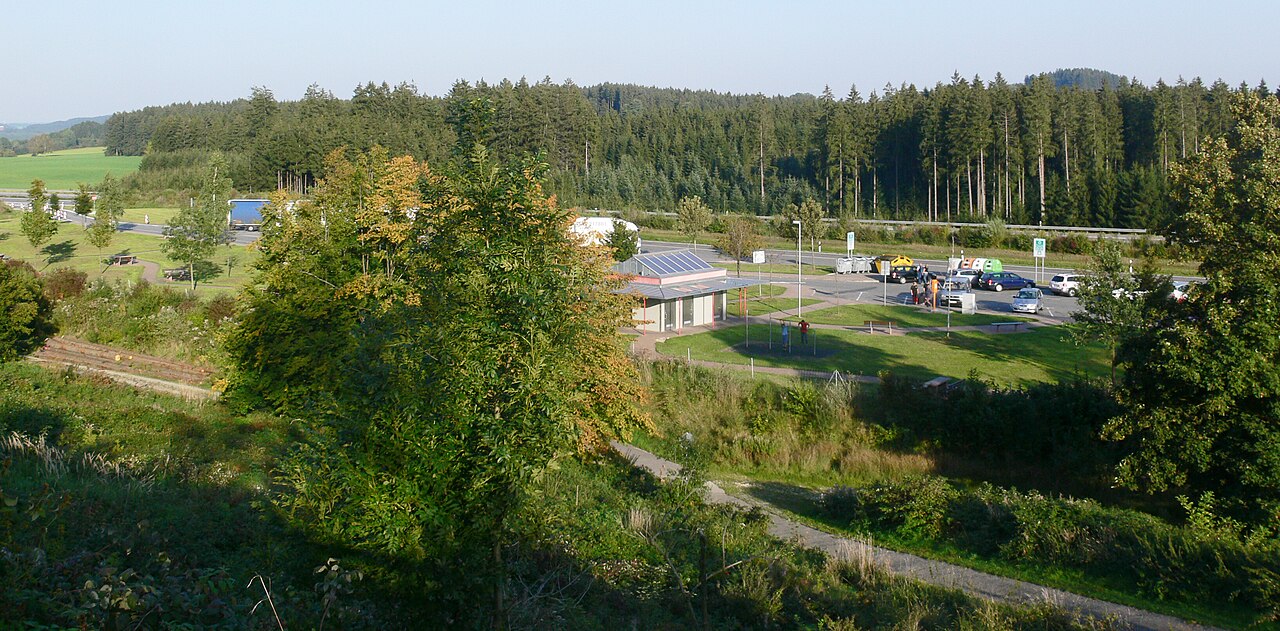

El conductor es lo primero
La fatiga degrada el tiempo de reacción, la atención y la percepción de peligros, y lo hace de manera gradual, de modo que eres un mal juez de tu propio estado. Las revisiones de factores de riesgo en la seguridad vial lo colocan consistentemente entre los contribuyentes significativos [3].
La orientación convencional — una pausa de al menos quince minutos aproximadamente cada dos horas — es pragmática más que derivada de un umbral agudo. También es, convenientemente, cercana a lo que quiere un coche eléctrico moderno; nuestra explicación sobre paradas de carga cubre el porqué.
Fatiga del conductor y riesgo de accidente
Los niños lo necesitan más a menudo
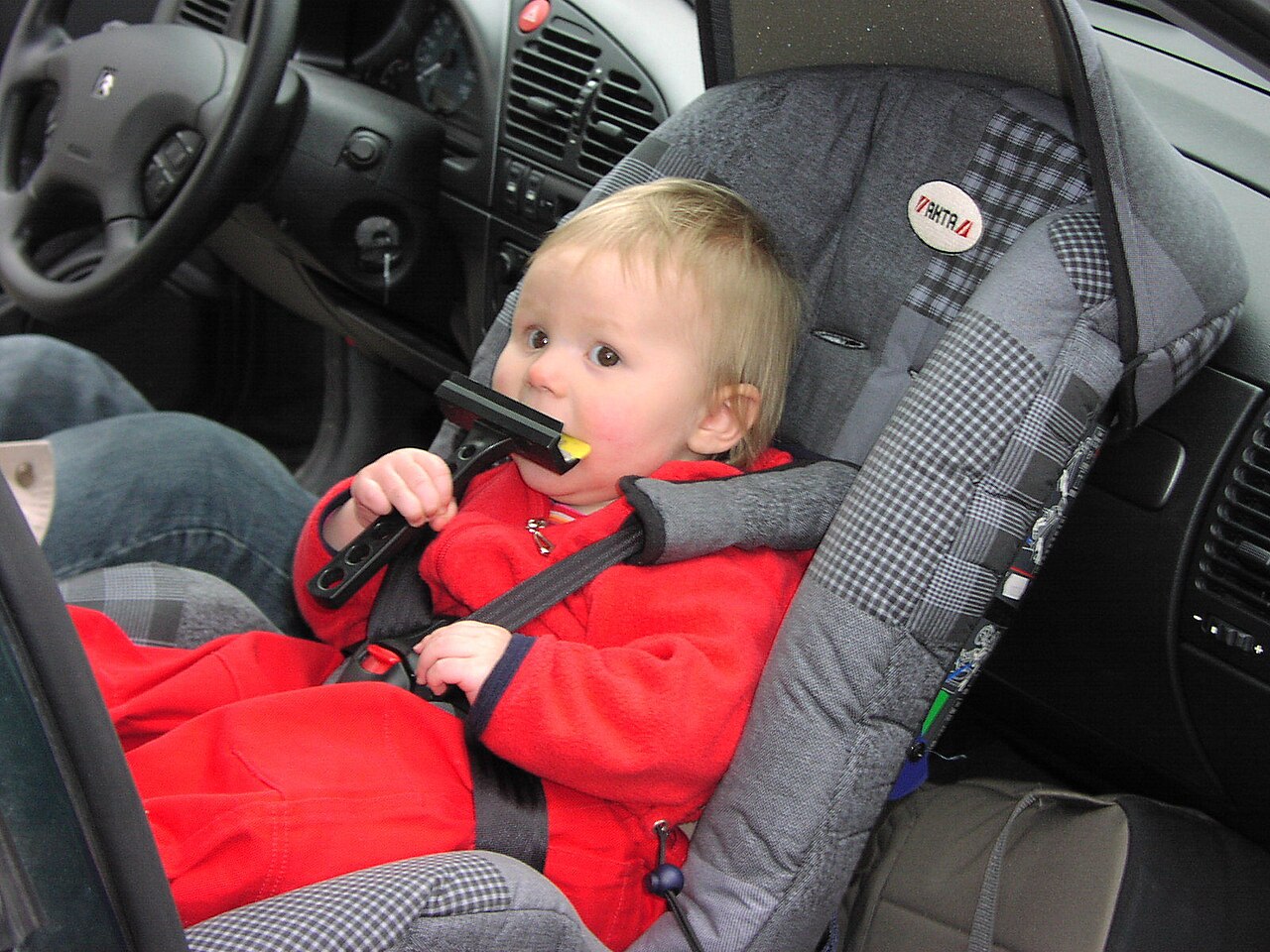
Los niños más pequeños toleran la restricción por períodos más cortos, y la orientación para bebés en particular desaconseja períodos muy largos sin interrupciones en un asiento de coche, porque una posición semi-vertical mantenida durante horas puede afectar la respiración en los más jóvenes. Para los niños pequeños y mayores, la restricción es conductual más que fisiológica, pero no es menos real.
| Pasajero | Intervalo | Duración de la parada |
|---|---|---|
| Conductor | Cada ~2 horas | 15+ minutos, fuera del coche |
| Bebé en un asiento de coche | Sigue la orientación de tu fabricante de asiento | Fuera del asiento, acostado plano |
| Niño pequeño | Cada 1,5-2 horas | 20+ minutos, corriendo alrededor |
| Niño mayor | Cada 2-3 horas | 15+ minutos |
Uso de sistemas de retención
Las revisiones sistemáticas de lesiones por accidentes en niños [1] y de intervenciones en seguridad vial [2][3] identifican repetidamente el uso correcto de sistemas de retención como un factor de protección importante. La palabra que hace el trabajo es correcto — el uso indebido es común, y un asiento instalado de manera suelta o con correas torcidas rinde muy por debajo de su calificación.
En un viaje largo, vale la pena comprobar la instalación antes de salir en lugar de en la primera parada, y vale la pena saber que muchos países ofrecen servicios de revisión gratuitos.
Preguntas frecuentes
¿Cuánto tiempo puede permanecer un bebé en la silla del coche?
¿Es mejor conducir de noche mientras duermen?
¿Alargan mucho el viaje las paradas?
¿Dónde deberíamos parar?

Lectura relacionada
Referencias
Cada cita a continuación enlaza con el registro original revisado por pares en PubMed o a través de DOI. Nada aquí sustituye el consejo médico.
-
Pediatric motor vehicle crashes injuries: A systematic review for forensic evaluation Giovannini E, Santelli S, Pelletti G, et al. · International journal of legal medicine · 2024 · Systematic review DOIPubMed 38337078Full text
-
Surveillance methods and interventions implemented in American Indian and Alaska Native communities to increase child restraint device and seat belt use in motor vehicles: a systematic review Virtue C, Goffe C, Shiang E, et al. · Injury prevention : journal of the International Society for Child and Adolescent Injury Prevention · 2024 · Systematic review DOIPubMed 38302282Full text
-
Saving lives through road safety risk factor interventions: global and national estimates Vecino-Ortiz AI, Nagarajan M, Elaraby S, et al. · Lancet (London, England) · 2022 · Systematic review DOIPubMed 35779550
-
Systematic review of child passenger safety laws and their associations with child restraint system use, injuries and deaths Sartin EB, Lombardi LR, Mirman JH · Injury prevention : journal of the International Society for Child and Adolescent Injury Prevention · 2021 · Systematic review DOIPubMed 34011513
-
Facilitators and barriers to child restraint use in motor vehicles: a qualitative evidence synthesis Bhaumik S, Hunter K, Matzopoulos R, et al. · Injury prevention : journal of the International Society for Child and Adolescent Injury Prevention · 2020 · Systematic review DOIPubMed 32447304
-
Systematic review of child restraint system interventions (2007-2018) Glerum KM, Zonfrillo MR, Fleisher L, et al. · Traffic injury prevention · 2019 · Systematic review DOIPubMed 31725324
-
Child Passenger Safety Durbin DR, Hoffman BD · Pediatrics · 2018 · Clinical guideline DOIPubMed 30166368
-
A systematic review of community interventions to improve Aboriginal child passenger safety Ishikawa T, Oudie E, Desapriya E, et al. · American journal of public health · 2014 · Systematic review DOIPubMed 24754652Full text
-
Community-based programs to promote car seat restraints in children 0-16 years -- a systematic review Turner C, McClure R, Nixon J, et al. · Accident; analysis and prevention · 2005 · Systematic review DOIPubMed 15607278
-
Preventing childhood unintentional injuries--what works? A literature review Dowswell T, Towner EM, Simpson G, et al. · Injury prevention : journal of the International Society for Child and Adolescent Injury Prevention · 1996 · Systematic review DOIPubMed 9346079Full text
-
A Prospective, Randomized Comparison of Functional Bracing and Spica Casting for Femoral Fractures Showed Equivalent Early Outcomes Andras LM, Sanders JS, Phan TN, et al. · The Journal of bone and joint surgery. American volume · 2025 · Randomised controlled trial DOIPubMed 40570075
-
Randomised feasibility trial of a virtual intervention to address infant car seat misuse Kendi S, Taylor MF, Thomas B, et al. · Injury prevention : journal of the International Society for Child and Adolescent Injury Prevention · 2023 · Randomised controlled trial DOIPubMed 36096654Full text
-
Trust in expert versus lay comments in online articles about spanking and car seat safety Scott JK, Gershoff ET · Journal of family psychology : JFP : journal of the Division of Family Psychology of the American Psychological Association (Division 43) · 2021 · Randomised controlled trial DOIPubMed 32658516Full text
-
Randomized Controlled Trial of Acute Illness Educational Intervention in the Pediatric Emergency Department: Written Versus Application-Based Education Lepley BE, Brousseau DC, May MF, et al. · Pediatric emergency care · 2020 · Randomised controlled trial DOIPubMed 30624425
-
Car seat education: A randomized controlled trial of teaching methods Kuroiwa E, Ragar RL, Langlais CS, et al. · Injury · 2018 · Randomised controlled trial DOIPubMed 29739654
-
A randomised safety promotion intervention trial among low-income families with toddlers Wang Y, Gielen AC, Magder LS, et al. · Injury prevention : journal of the International Society for Child and Adolescent Injury Prevention · 2018 · Randomised controlled trial DOIPubMed 28385953Full text
-
Teaching infant car seat installation via interactive visual presence: An experimental trial Schwebel DC, Johnston A, Rouse J · Traffic injury prevention · 2017 · Randomised controlled trial DOIPubMed 27576099
-
Child Passenger Safety Technician Consultation in the Pediatric Primary Care Setting Burstein D, Zonfrillo MR, Baird J, et al. · Clinical pediatrics · 2017 · Randomised controlled trial DOIPubMed 28443338
-
Designing and evaluating a persuasive child restraint television commercial Lewis I, Ho B, Lennon A · Traffic injury prevention · 2016 · Randomised controlled trial DOIPubMed 26207520
-
Child Restraint Fitting Stations reduce incorrect restraint use among child occupants Brown J, Finch CF, Hatfield J, et al. · Accident; analysis and prevention · 2011 · Randomised controlled trial DOIPubMed 21376910
-
Child Passenger Safety Zonfrillo MR · Pediatric clinics of North America · 2025 · Review DOIPubMed 41193143
-
Forgotten children in parked vehicles: a review of Italian fatalities Scozzari G, Bert F, Gualano MR, et al. · Minerva pediatrica · 2020 · Review DOIPubMed 29381013
-
Traveling with children: beyond car seat safety Polli JB, Polli I · Jornal de pediatria · 2015 · Review DOIPubMed 26232504
-
[Effect of fatigue on the fitness to drive] Makowiec-Dabrowska T, Bortkiewicz A, Siedlecka J, et al. · Medycyna pracy · 2011 · Review PubMed 21870418
-
Road safety research in China: review and appraisal Wang P, Rau PL, Salvendy G · Traffic injury prevention · 2010 · Review DOIPubMed 20730690
-
Injury Patterns, Imaging Usage, and Disparities Associated With Car Restraint Use in Children McCauley CJ, Purcell LN, Schiro SE, et al. · The American surgeon · 2023 · Journal article DOIPubMed 37220878
-
Child safety restraint patterns in Moldova Cazacu-Stratu A, Varga NK, Cociu S, et al. · Traffic injury prevention · 2022 · Journal article DOIPubMed 35947496Full text
-
Physiological signal analysis for fatigue level of experienced and inexperienced drivers Li R, Su W, Lu Z · Traffic injury prevention · 2017 · Journal article DOIPubMed 27589585
-
Driving fatigue in professional drivers: a survey of truck and taxi drivers Meng F, Li S, Cao L, et al. · Traffic injury prevention · 2015 · Journal article DOIPubMed 25357206
-
The impacts of multiple rest-break periods on commercial truck driver's crash risk Chen C, Xie Y · Journal of safety research · 2014 · Journal article DOIPubMed 24529096
-
Driver fatigue and highway driving: a simulator study Ting PH, Hwang JR, Doong JL, et al. · Physiology & behavior · 2008 · Journal article DOIPubMed 18402991