Przystanki
Jak często należy się zatrzymywać w długiej podróży?
Mniej więcej co dwie godziny dla kierowcy, częściej dla małych dzieci, a samochód elektryczny będzie chciał zatrzymać się w podobnym interwale.


Kierowca jest najważniejszy
Zmęczenie pogarsza czas reakcji, uwagę i postrzeganie zagrożeń, a dzieje się to na tyle stopniowo, że trudno ocenić swój stan. Przeglądy czynników ryzyka bezpieczeństwa drogowego konsekwentnie umieszczają je wśród istotnych przyczyn [3].
Konwencjonalne zalecenia — przerwa trwająca co najmniej piętnaście minut mniej więcej co dwie godziny — są pragmatyczne, a nie oparte na wyraźnym progu. Jest to również, co wygodne, bliskie temu, czego chce nowoczesny samochód elektryczny; nasz przewodnik po przerwach na ładowanie wyjaśnia dlaczego.
Zmęczenie kierowcy i ryzyko wypadku
Dzieci potrzebują tego częściej
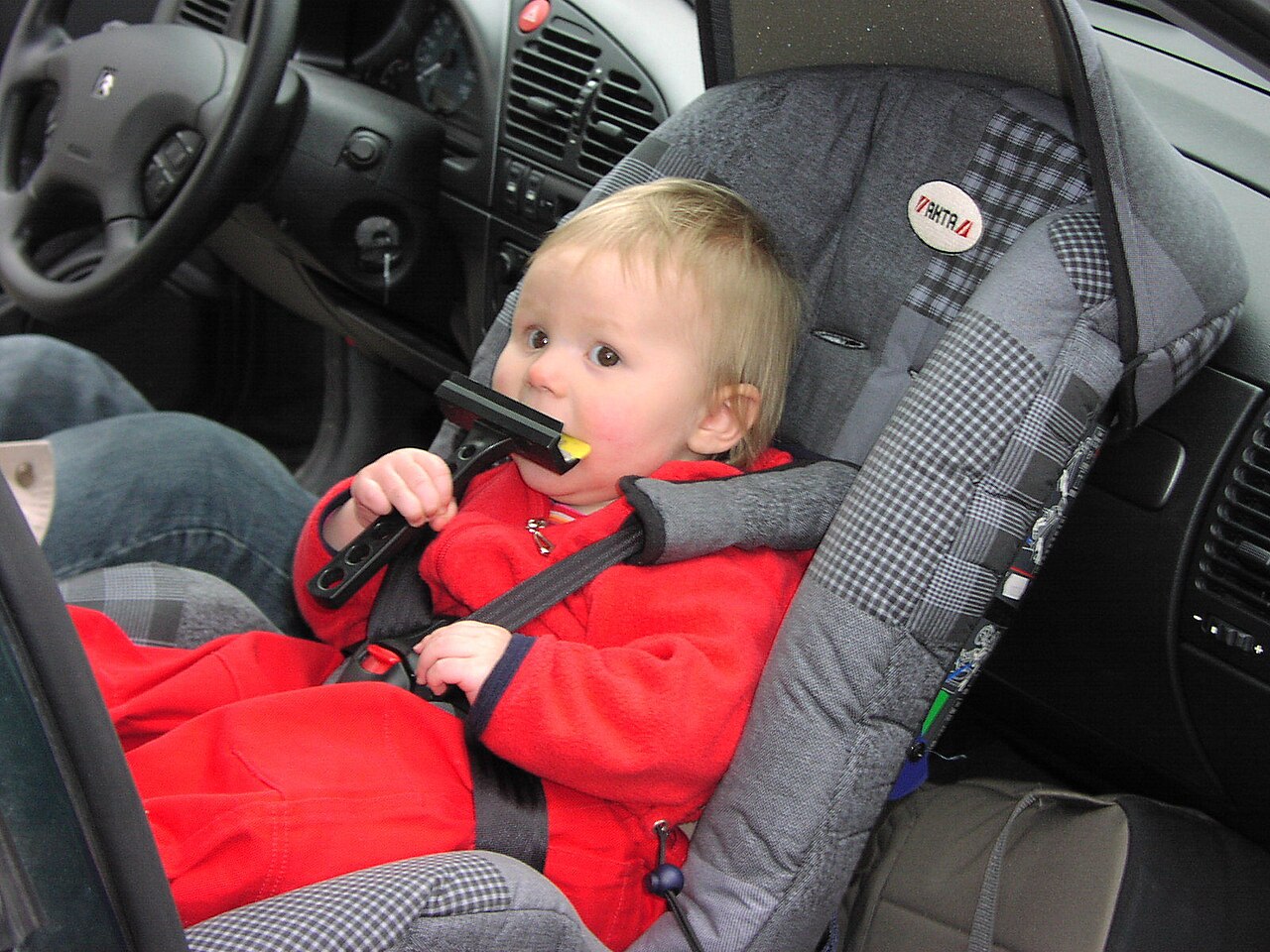
Młodsze dzieci tolerują ograniczenia przez krótsze okresy, a szczególnie w przypadku niemowląt zaleca się unikanie bardzo długich nieprzerwanych okresów w foteliku, ponieważ półsiedząca pozycja utrzymywana przez godziny może wpływać na oddychanie u najmłodszych. W przypadku małych dzieci i starszych dzieci ograniczenie ma charakter behawioralny, a nie fizjologiczny, ale jest równie realne.
| Pasażer | Interwał | Czas przerwy |
|---|---|---|
| Kierowca | Co ~2 godziny | 15+ minut, poza samochodem |
| Niemowlę w foteliku samochodowym | Postępuj zgodnie z zaleceniami producenta fotelika | Poza fotelikiem, leżąc płasko |
| Małe dziecko | Co 1,5-2 godziny | 20+ minut, biegając |
| Starsze dziecko | Co 2-3 godziny | 15+ minut |
Użycie fotelika
Systematyczne przeglądy urazów dzieci w wypadkach [1] oraz interwencji w zakresie bezpieczeństwa drogowego [2][3] wielokrotnie identyfikują prawidłowe użycie fotelika jako główny czynnik ochronny. Słowo, które ma znaczenie, to prawidłowe — niewłaściwe użycie jest powszechne, a fotelik zamontowany luźno lub z przekręconymi pasami działa znacznie poniżej swojej oceny.
Podczas długiej podróży warto sprawdzić montaż przed wyjazdem, a nie przy pierwszej przerwie, i warto wiedzieć, że wiele krajów oferuje bezpłatne usługi sprawdzania.
Najczęściej zadawane pytania
Jak długo dziecko może przebywać w foteliku samochodowym?
Czy lepiej jechać w nocy, gdy śpią?
Czy postoje znacznie wydłużają podróż?
Gdzie powinniśmy się zatrzymać?

Powiązane lektury
Odnośniki
Każda cytacja poniżej prowadzi do oryginalnego recenzowanego dokumentu na PubMed lub za pośrednictwem DOI. Nic tutaj nie zastępuje porady medycznej.
-
Pediatric motor vehicle crashes injuries: A systematic review for forensic evaluation Giovannini E, Santelli S, Pelletti G, et al. · International journal of legal medicine · 2024 · Systematic review DOIPubMed 38337078Full text
-
Surveillance methods and interventions implemented in American Indian and Alaska Native communities to increase child restraint device and seat belt use in motor vehicles: a systematic review Virtue C, Goffe C, Shiang E, et al. · Injury prevention : journal of the International Society for Child and Adolescent Injury Prevention · 2024 · Systematic review DOIPubMed 38302282Full text
-
Saving lives through road safety risk factor interventions: global and national estimates Vecino-Ortiz AI, Nagarajan M, Elaraby S, et al. · Lancet (London, England) · 2022 · Systematic review DOIPubMed 35779550
-
Systematic review of child passenger safety laws and their associations with child restraint system use, injuries and deaths Sartin EB, Lombardi LR, Mirman JH · Injury prevention : journal of the International Society for Child and Adolescent Injury Prevention · 2021 · Systematic review DOIPubMed 34011513
-
Facilitators and barriers to child restraint use in motor vehicles: a qualitative evidence synthesis Bhaumik S, Hunter K, Matzopoulos R, et al. · Injury prevention : journal of the International Society for Child and Adolescent Injury Prevention · 2020 · Systematic review DOIPubMed 32447304
-
Systematic review of child restraint system interventions (2007-2018) Glerum KM, Zonfrillo MR, Fleisher L, et al. · Traffic injury prevention · 2019 · Systematic review DOIPubMed 31725324
-
Child Passenger Safety Durbin DR, Hoffman BD · Pediatrics · 2018 · Clinical guideline DOIPubMed 30166368
-
A systematic review of community interventions to improve Aboriginal child passenger safety Ishikawa T, Oudie E, Desapriya E, et al. · American journal of public health · 2014 · Systematic review DOIPubMed 24754652Full text
-
Community-based programs to promote car seat restraints in children 0-16 years -- a systematic review Turner C, McClure R, Nixon J, et al. · Accident; analysis and prevention · 2005 · Systematic review DOIPubMed 15607278
-
Preventing childhood unintentional injuries--what works? A literature review Dowswell T, Towner EM, Simpson G, et al. · Injury prevention : journal of the International Society for Child and Adolescent Injury Prevention · 1996 · Systematic review DOIPubMed 9346079Full text
-
A Prospective, Randomized Comparison of Functional Bracing and Spica Casting for Femoral Fractures Showed Equivalent Early Outcomes Andras LM, Sanders JS, Phan TN, et al. · The Journal of bone and joint surgery. American volume · 2025 · Randomised controlled trial DOIPubMed 40570075
-
Randomised feasibility trial of a virtual intervention to address infant car seat misuse Kendi S, Taylor MF, Thomas B, et al. · Injury prevention : journal of the International Society for Child and Adolescent Injury Prevention · 2023 · Randomised controlled trial DOIPubMed 36096654Full text
-
Trust in expert versus lay comments in online articles about spanking and car seat safety Scott JK, Gershoff ET · Journal of family psychology : JFP : journal of the Division of Family Psychology of the American Psychological Association (Division 43) · 2021 · Randomised controlled trial DOIPubMed 32658516Full text
-
Randomized Controlled Trial of Acute Illness Educational Intervention in the Pediatric Emergency Department: Written Versus Application-Based Education Lepley BE, Brousseau DC, May MF, et al. · Pediatric emergency care · 2020 · Randomised controlled trial DOIPubMed 30624425
-
Car seat education: A randomized controlled trial of teaching methods Kuroiwa E, Ragar RL, Langlais CS, et al. · Injury · 2018 · Randomised controlled trial DOIPubMed 29739654
-
A randomised safety promotion intervention trial among low-income families with toddlers Wang Y, Gielen AC, Magder LS, et al. · Injury prevention : journal of the International Society for Child and Adolescent Injury Prevention · 2018 · Randomised controlled trial DOIPubMed 28385953Full text
-
Teaching infant car seat installation via interactive visual presence: An experimental trial Schwebel DC, Johnston A, Rouse J · Traffic injury prevention · 2017 · Randomised controlled trial DOIPubMed 27576099
-
Child Passenger Safety Technician Consultation in the Pediatric Primary Care Setting Burstein D, Zonfrillo MR, Baird J, et al. · Clinical pediatrics · 2017 · Randomised controlled trial DOIPubMed 28443338
-
Designing and evaluating a persuasive child restraint television commercial Lewis I, Ho B, Lennon A · Traffic injury prevention · 2016 · Randomised controlled trial DOIPubMed 26207520
-
Child Restraint Fitting Stations reduce incorrect restraint use among child occupants Brown J, Finch CF, Hatfield J, et al. · Accident; analysis and prevention · 2011 · Randomised controlled trial DOIPubMed 21376910
-
Child Passenger Safety Zonfrillo MR · Pediatric clinics of North America · 2025 · Review DOIPubMed 41193143
-
Forgotten children in parked vehicles: a review of Italian fatalities Scozzari G, Bert F, Gualano MR, et al. · Minerva pediatrica · 2020 · Review DOIPubMed 29381013
-
Traveling with children: beyond car seat safety Polli JB, Polli I · Jornal de pediatria · 2015 · Review DOIPubMed 26232504
-
[Effect of fatigue on the fitness to drive] Makowiec-Dabrowska T, Bortkiewicz A, Siedlecka J, et al. · Medycyna pracy · 2011 · Review PubMed 21870418
-
Road safety research in China: review and appraisal Wang P, Rau PL, Salvendy G · Traffic injury prevention · 2010 · Review DOIPubMed 20730690
-
Injury Patterns, Imaging Usage, and Disparities Associated With Car Restraint Use in Children McCauley CJ, Purcell LN, Schiro SE, et al. · The American surgeon · 2023 · Journal article DOIPubMed 37220878
-
Child safety restraint patterns in Moldova Cazacu-Stratu A, Varga NK, Cociu S, et al. · Traffic injury prevention · 2022 · Journal article DOIPubMed 35947496Full text
-
Physiological signal analysis for fatigue level of experienced and inexperienced drivers Li R, Su W, Lu Z · Traffic injury prevention · 2017 · Journal article DOIPubMed 27589585
-
Driving fatigue in professional drivers: a survey of truck and taxi drivers Meng F, Li S, Cao L, et al. · Traffic injury prevention · 2015 · Journal article DOIPubMed 25357206
-
The impacts of multiple rest-break periods on commercial truck driver's crash risk Chen C, Xie Y · Journal of safety research · 2014 · Journal article DOIPubMed 24529096
-
Driver fatigue and highway driving: a simulator study Ting PH, Hwang JR, Doong JL, et al. · Physiology & behavior · 2008 · Journal article DOIPubMed 18402991