Paragens
Com que frequência deve parar numa viagem longa?
Aproximadamente a cada duas horas para o condutor, mais frequentemente para crianças pequenas, e um carro elétrico também desejará parar aproximadamente nesse intervalo.
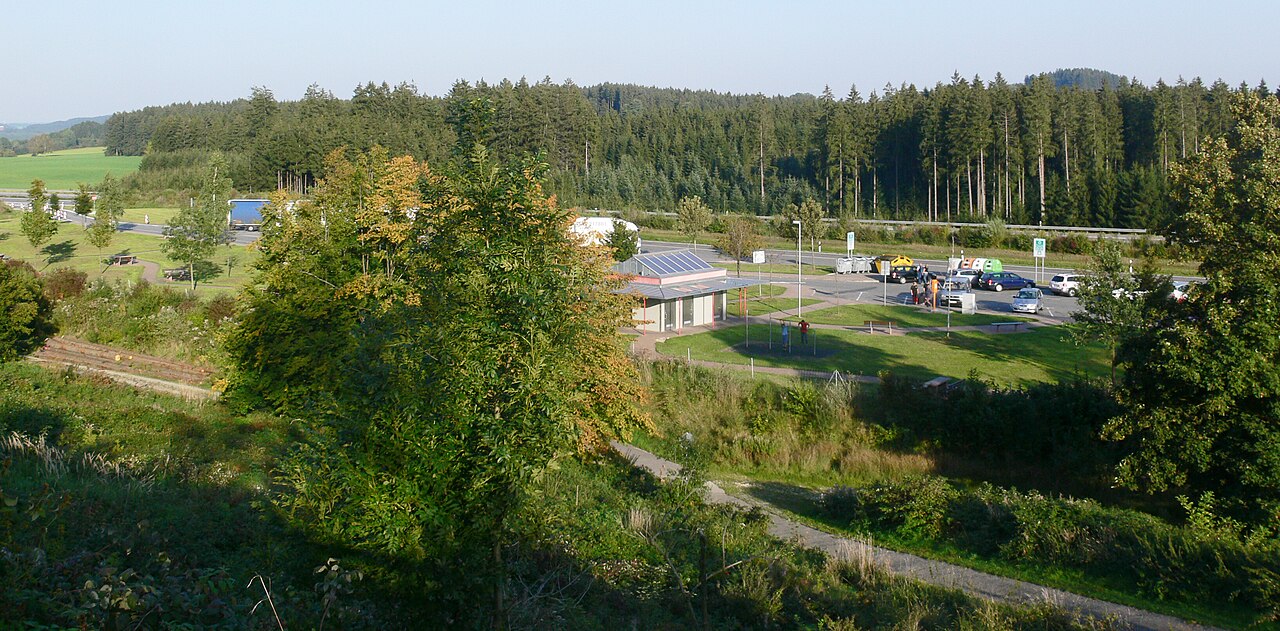

O condutor vem em primeiro lugar
A fadiga degrada o tempo de reação, a atenção e a percepção de perigos, e isso acontece de forma gradual o suficiente para que você seja um mau juiz do seu próprio estado. As revisões dos fatores de risco para a segurança rodoviária colocam-no consistentemente entre os contribuintes significativos [3].
A orientação convencional — uma pausa de pelo menos quinze minutos aproximadamente a cada duas horas — é pragmática em vez de derivada de um limiar agudo. É também, convenientemente, próxima do que um carro elétrico moderno deseja; o nosso explicador sobre paragens para carregamento cobre o porquê.
Fadiga do condutor e risco de acidente
As crianças precisam disso mais frequentemente
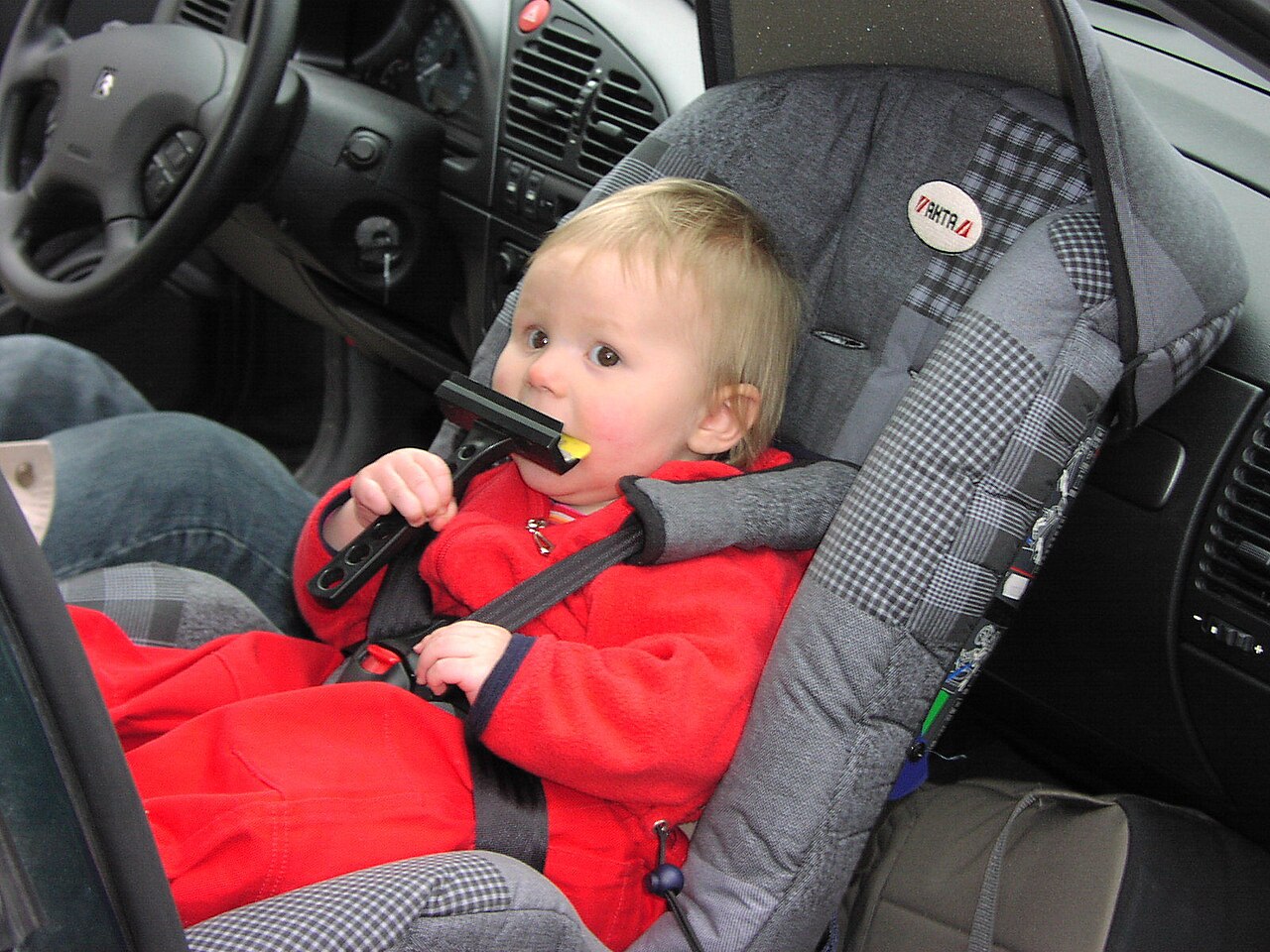
Crianças mais novas toleram a retenção por períodos mais curtos, e a orientação para bebés, em particular, aconselha contra períodos muito longos sem interrupções numa cadeira de carro, porque uma posição semi-ereta mantida durante horas pode afetar a respiração nos muito jovens. Para crianças pequenas e mais velhas, a restrição é comportamental em vez de fisiológica, mas não é menos real.
| Passageiro | Intervalo | Duração da paragem |
|---|---|---|
| Condutor | A cada ~2 horas | 15+ minutos, fora do carro |
| Bebé numa cadeira de carro | Siga a orientação do fabricante da sua cadeira | Fora da cadeira, deitado plano |
| Criança pequena | A cada 1,5-2 horas | 20+ minutos, a correr |
| Criança mais velha | A cada 2-3 horas | 15+ minutos |
Uso do sistema de retenção
Revisões sistemáticas de lesões em acidentes pediátricos [1] e de intervenções de segurança rodoviária [2][3] identificam repetidamente o uso correto do sistema de retenção como um fator de proteção importante. A palavra que faz o trabalho é correto — o uso indevido é comum, e uma cadeira instalada de forma solta ou com cintas torcidas tem um desempenho muito abaixo da sua classificação.
Numa viagem longa, vale a pena verificar a instalação antes de partir em vez de na primeira paragem, e vale a pena saber que muitos países oferecem serviços de verificação gratuitos.
Perguntas frequentes
Quanto tempo pode um bebé ficar na cadeira auto?
É melhor conduzir durante a noite enquanto eles dormem?
As paragens tornam a viagem muito mais longa?
Onde devemos parar?

Leitura relacionada
Referências
Cada citação abaixo liga-se ao registo original revisto por pares no PubMed ou via DOI. Nada aqui substitui o aconselhamento médico.
-
Pediatric motor vehicle crashes injuries: A systematic review for forensic evaluation Giovannini E, Santelli S, Pelletti G, et al. · International journal of legal medicine · 2024 · Systematic review DOIPubMed 38337078Full text
-
Surveillance methods and interventions implemented in American Indian and Alaska Native communities to increase child restraint device and seat belt use in motor vehicles: a systematic review Virtue C, Goffe C, Shiang E, et al. · Injury prevention : journal of the International Society for Child and Adolescent Injury Prevention · 2024 · Systematic review DOIPubMed 38302282Full text
-
Saving lives through road safety risk factor interventions: global and national estimates Vecino-Ortiz AI, Nagarajan M, Elaraby S, et al. · Lancet (London, England) · 2022 · Systematic review DOIPubMed 35779550
-
Systematic review of child passenger safety laws and their associations with child restraint system use, injuries and deaths Sartin EB, Lombardi LR, Mirman JH · Injury prevention : journal of the International Society for Child and Adolescent Injury Prevention · 2021 · Systematic review DOIPubMed 34011513
-
Facilitators and barriers to child restraint use in motor vehicles: a qualitative evidence synthesis Bhaumik S, Hunter K, Matzopoulos R, et al. · Injury prevention : journal of the International Society for Child and Adolescent Injury Prevention · 2020 · Systematic review DOIPubMed 32447304
-
Systematic review of child restraint system interventions (2007-2018) Glerum KM, Zonfrillo MR, Fleisher L, et al. · Traffic injury prevention · 2019 · Systematic review DOIPubMed 31725324
-
Child Passenger Safety Durbin DR, Hoffman BD · Pediatrics · 2018 · Clinical guideline DOIPubMed 30166368
-
A systematic review of community interventions to improve Aboriginal child passenger safety Ishikawa T, Oudie E, Desapriya E, et al. · American journal of public health · 2014 · Systematic review DOIPubMed 24754652Full text
-
Community-based programs to promote car seat restraints in children 0-16 years -- a systematic review Turner C, McClure R, Nixon J, et al. · Accident; analysis and prevention · 2005 · Systematic review DOIPubMed 15607278
-
Preventing childhood unintentional injuries--what works? A literature review Dowswell T, Towner EM, Simpson G, et al. · Injury prevention : journal of the International Society for Child and Adolescent Injury Prevention · 1996 · Systematic review DOIPubMed 9346079Full text
-
A Prospective, Randomized Comparison of Functional Bracing and Spica Casting for Femoral Fractures Showed Equivalent Early Outcomes Andras LM, Sanders JS, Phan TN, et al. · The Journal of bone and joint surgery. American volume · 2025 · Randomised controlled trial DOIPubMed 40570075
-
Randomised feasibility trial of a virtual intervention to address infant car seat misuse Kendi S, Taylor MF, Thomas B, et al. · Injury prevention : journal of the International Society for Child and Adolescent Injury Prevention · 2023 · Randomised controlled trial DOIPubMed 36096654Full text
-
Trust in expert versus lay comments in online articles about spanking and car seat safety Scott JK, Gershoff ET · Journal of family psychology : JFP : journal of the Division of Family Psychology of the American Psychological Association (Division 43) · 2021 · Randomised controlled trial DOIPubMed 32658516Full text
-
Randomized Controlled Trial of Acute Illness Educational Intervention in the Pediatric Emergency Department: Written Versus Application-Based Education Lepley BE, Brousseau DC, May MF, et al. · Pediatric emergency care · 2020 · Randomised controlled trial DOIPubMed 30624425
-
Car seat education: A randomized controlled trial of teaching methods Kuroiwa E, Ragar RL, Langlais CS, et al. · Injury · 2018 · Randomised controlled trial DOIPubMed 29739654
-
A randomised safety promotion intervention trial among low-income families with toddlers Wang Y, Gielen AC, Magder LS, et al. · Injury prevention : journal of the International Society for Child and Adolescent Injury Prevention · 2018 · Randomised controlled trial DOIPubMed 28385953Full text
-
Teaching infant car seat installation via interactive visual presence: An experimental trial Schwebel DC, Johnston A, Rouse J · Traffic injury prevention · 2017 · Randomised controlled trial DOIPubMed 27576099
-
Child Passenger Safety Technician Consultation in the Pediatric Primary Care Setting Burstein D, Zonfrillo MR, Baird J, et al. · Clinical pediatrics · 2017 · Randomised controlled trial DOIPubMed 28443338
-
Designing and evaluating a persuasive child restraint television commercial Lewis I, Ho B, Lennon A · Traffic injury prevention · 2016 · Randomised controlled trial DOIPubMed 26207520
-
Child Restraint Fitting Stations reduce incorrect restraint use among child occupants Brown J, Finch CF, Hatfield J, et al. · Accident; analysis and prevention · 2011 · Randomised controlled trial DOIPubMed 21376910
-
Child Passenger Safety Zonfrillo MR · Pediatric clinics of North America · 2025 · Review DOIPubMed 41193143
-
Forgotten children in parked vehicles: a review of Italian fatalities Scozzari G, Bert F, Gualano MR, et al. · Minerva pediatrica · 2020 · Review DOIPubMed 29381013
-
Traveling with children: beyond car seat safety Polli JB, Polli I · Jornal de pediatria · 2015 · Review DOIPubMed 26232504
-
[Effect of fatigue on the fitness to drive] Makowiec-Dabrowska T, Bortkiewicz A, Siedlecka J, et al. · Medycyna pracy · 2011 · Review PubMed 21870418
-
Road safety research in China: review and appraisal Wang P, Rau PL, Salvendy G · Traffic injury prevention · 2010 · Review DOIPubMed 20730690
-
Injury Patterns, Imaging Usage, and Disparities Associated With Car Restraint Use in Children McCauley CJ, Purcell LN, Schiro SE, et al. · The American surgeon · 2023 · Journal article DOIPubMed 37220878
-
Child safety restraint patterns in Moldova Cazacu-Stratu A, Varga NK, Cociu S, et al. · Traffic injury prevention · 2022 · Journal article DOIPubMed 35947496Full text
-
Physiological signal analysis for fatigue level of experienced and inexperienced drivers Li R, Su W, Lu Z · Traffic injury prevention · 2017 · Journal article DOIPubMed 27589585
-
Driving fatigue in professional drivers: a survey of truck and taxi drivers Meng F, Li S, Cao L, et al. · Traffic injury prevention · 2015 · Journal article DOIPubMed 25357206
-
The impacts of multiple rest-break periods on commercial truck driver's crash risk Chen C, Xie Y · Journal of safety research · 2014 · Journal article DOIPubMed 24529096
-
Driver fatigue and highway driving: a simulator study Ting PH, Hwang JR, Doong JL, et al. · Physiology & behavior · 2008 · Journal article DOIPubMed 18402991